
Roof terraces: wind, weight and a garden in the sky
A flat roof can become the best room in the house, but it is also the most exposed. Plan for weight, water and wind first, and the garden in the sky will follow.
Climb the last flight of stairs on a summer evening, push open the door, and the town lies all around you: roofs at every height, a bell tower, a line of washing, the sea or the hills beyond. Up here the breeze that never reached the street is suddenly strong enough to lift a napkin from the table. The floor still holds the heat of the afternoon, and the rosemary in the corner smells of resin. A roof terrace gives you sky and air in a way no ground floor garden can, and in return it asks for careful planning.
The roof as a room
Flat roofs, called azoteas in Spain, are common in parts of the Mediterranean, and they were never wasted space. People dried laundry on them, collected rainwater from them, and on the hottest nights carried mattresses up to sleep in the cooler air. Turning a roof into a terrace continues that tradition. Adding planters, furniture and a crowd of friends, however, changes what the roof has to do, and it pays to understand that before you buy a single pot.
Weight first: what your roof can carry
The most important step is the least visible one. Have the structure and its load capacity checked by a structural engineer before you plan anything heavy. A roof that is perfectly sound for the occasional repair may not be designed to carry a terrace full of people, pots and furniture, and only a professional can judge that from the construction.
Soil is the main surprise. Wet soil is very heavy, far heavier than it looks in a bag, and a row of large planters after a downpour concentrates a great deal of weight in one place. Water features and hot tubs add even more, because water itself is heavy and the containers that hold it are rarely light. An engineer can tell you not only how much the roof can take but also where: the areas above walls and beams usually carry more than the middle of a span.
- Place the heaviest items, such as large planters, where the engineer advises, usually over walls or beams.
- Use lightweight planters of fibreglass, wood or fabric bags instead of stone or thick terracotta.
- Fill them with a lightweight substrate made for roofs and containers rather than garden soil.
- Think twice about water features and hot tubs, and never install one without professional advice.
Protect the waterproofing and keep water moving
Under every roof terrace lies a waterproof layer, and everything you do up there should protect it. A leak caused by a screw, a sharp table leg or a planter dragged across the surface can be hard to trace and costly to repair, and it usually shows itself first as a stain on the ceiling below. Never drill through the membrane to fix screens or furniture; ask a roofer for fixings that work with it.
Drainage matters just as much. Roofs are built with gentle falls towards their outlets, and those outlets must stay clear of leaves, soil and grit, especially before the autumn storms. That is why the best roof floors are raised: decking on a frame, or tiles laid on adjustable pedestals, so that rain runs off underneath to the drains while you walk on a level surface above. The gap shades the membrane from direct sun, and you can lift a tile or a board to check the outlets.
Living with the wind
Wind is stronger on roofs than at ground level, and it comes in gusts that appear suddenly around corners, chimneys and parapets. A calm afternoon in the garden can be a blustery one four floors up, so everything that can move should either be heavy or be tied down.
- Choose furniture with some weight to it, and fix lighter pieces or stack them away when strong wind is forecast.
- Use a large umbrella only on a heavy base, and close it every time you leave the terrace.
- Stand plants in wide, stable pots rather than tall, narrow ones that tip over in a gust.
- Plant low, flexible species that bend in the wind rather than break.
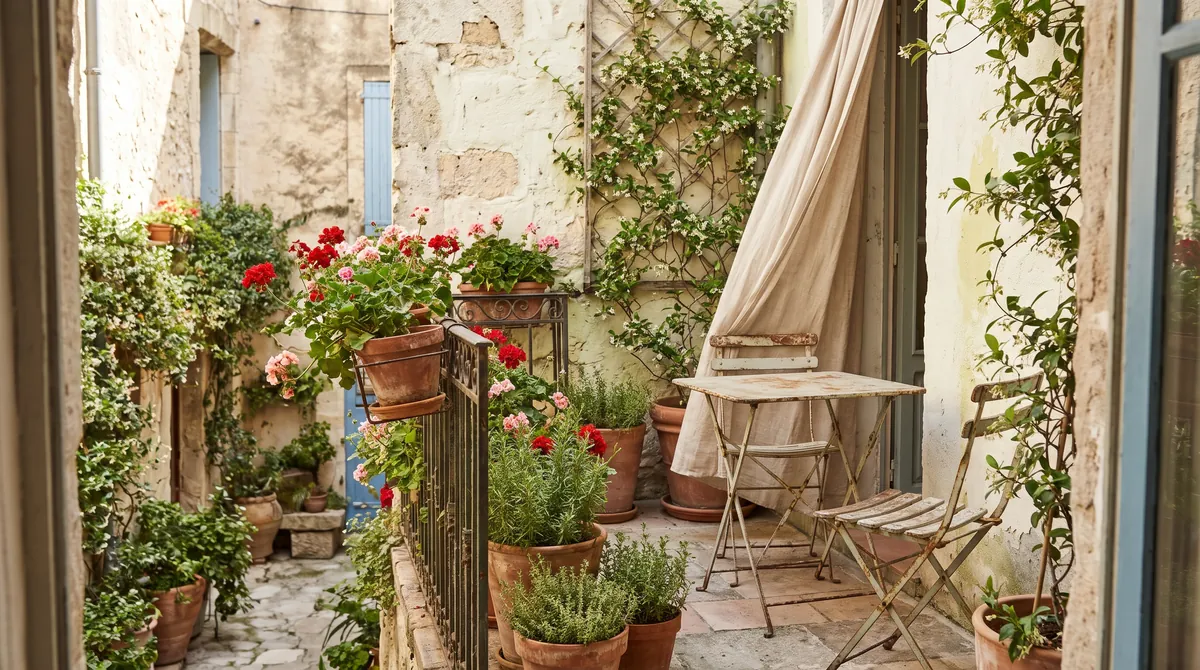
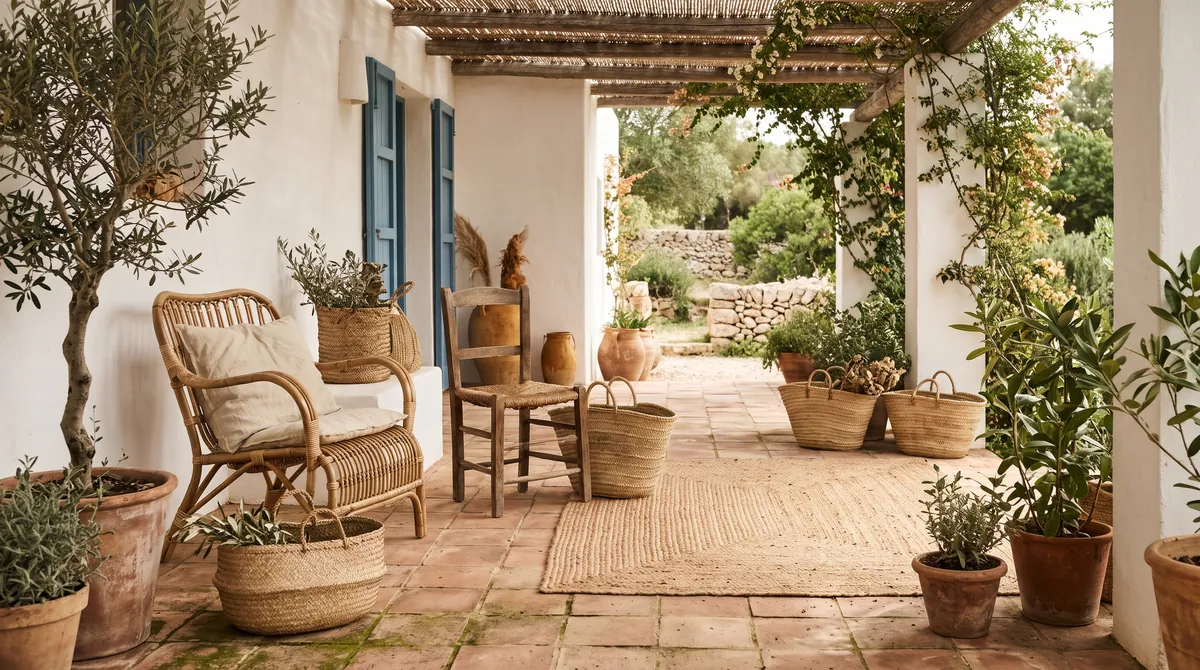
Plants that cope with wind are often the same ones that cope with sun and drought: rosemary, lavender, ornamental grasses and olives, all with small or narrow leaves and tough stems. Group them so that the hardiest stand on the windward side and shelter the more delicate ones behind. Large, soft leaves tend to tear and scorch up here, so leave them for the shaded courtyard below.
On a roof, everything that can move should either be heavy or be tied down.
Shade, railings and privacy
There is no tree to sit under on a roof, so shade has to be built. A shade sail is light and needs only a few strong fixing points; a pergola gives a permanent frame for climbers or reed mats; a large umbrella on a heavy base is the simplest solution of all. Each of them must be fixed or weighted with the wind in mind, and none of the fixings may compromise the waterproofing.
Parapets and railings must reach the height required by local rules, which exist for good reason on a space where people relax, eat and drink, and sometimes bring children. Do not place benches, crates or large pots right against a low parapet, where they could be used as a step.
For privacy, slatted timber screens, cane panels or a row of tall grasses in troughs soften the view from neighbouring roofs without blocking the breeze entirely. Solid walls catch the wind and can create uncomfortable eddies behind them, so semi-open screens usually work better.
Water, light and the neighbours
Carrying watering cans up the stairs every evening quickly loses its charm. Drip irrigation with a timer delivers water slowly to each pot, wastes little and keeps plants alive while you are away. Ask a plumber whether a tap can be brought up to the roof, and make sure any surplus water runs to the outlets rather than standing on the membrane.
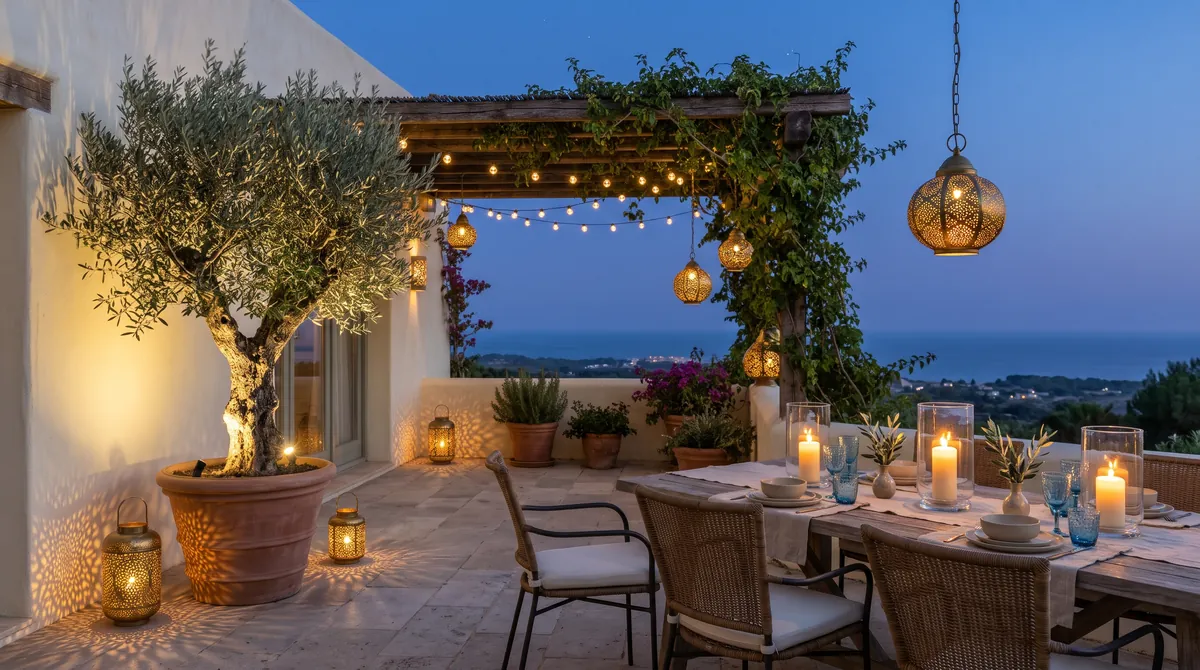
Lighting turns the terrace into an evening room. Low, warm lights along paths and steps make it safe to move about, and they should be shielded so that they do not shine into the windows around you. Fixed electrics outdoors, and especially on a roof, should always be installed by a qualified electrician.
Finally, remember that a roof terrace is the most visible part of your home to the people around you. Keep music low late at night, angle lights downwards and think about where smoke from a grill will drift. Good relations with the neighbours are worth more than any view.
Questions and answers
Can any flat roof become a terrace?
Not automatically. A structural engineer needs to check whether the roof can carry people, furniture and planters, and local rules may set requirements for access and railings. Many roofs can be adapted, but the check always comes first.
What are the best plants for a windy roof terrace?
Plants with small, narrow or silver leaves and tough stems cope best, such as rosemary, lavender, ornamental grasses and olives. Plant them in wide, stable pots and avoid large, soft leaves that tear in the wind.
Should I lay tiles directly on the roof?
It is usually better to lay tiles on adjustable pedestals or to use raised decking. Water then runs off underneath to the drains, the waterproof layer is protected and you can reach the outlets for cleaning.
How do I water plants on a roof terrace?
Drip irrigation with a timer is the most practical solution, delivering water slowly to each pot. Make sure surplus water can drain to the roof outlets and that a water supply is brought up safely by a professional.
Further reading in our network
- colistiaIndoor and outdoor living
Indoor and outdoor living, with ideas for furnishing terraces, balconies and the rooms that open onto them.
- glaminiaDesigner lighting
Designer lighting, including lamps and fittings that bring a terrace to life after dark.
Our articles are general information written with care. Building work, roof loads, electrics, gas and fire need qualified professionals and local permits; plant care depends on your own climate and soil.