
Outdoor furniture that lasts: teak, iron, rope and stone
Sun, salt air and rain test every chair on a terrace. How each material behaves, what it needs from you, and how to choose pieces that are still comfortable in ten years.
Run a hand over an old teak bench that has stood on a seaside terrace for years and the wood feels like driftwood: silver, soft, slightly ribbed where the grain has opened. Beside it, an iron chair shows a bloom of rust at the feet, and a cushion left out in last night’s shower still smells faintly damp. Outdoor furniture lives a hard life. The sun bleaches it, salt air eats into metal and rain finds every joint. Choosing well is less about style than about knowing how each material ages.
Three enemies: sun, salt and rain
Ultraviolet light breaks down the surface of wood, plastics and fabrics, fading colour and making some materials brittle. Salt carried on sea air settles on everything near the coast and speeds up corrosion in metal, often in places you cannot see, such as screw holes and welds. Rain and dew soak into wood, fibres and foam, and anything that stays wet for long invites mould and rot.
A material that copes with one of these enemies does not necessarily cope with all three. So before you look at shapes and colours, ask where the furniture will stand: under a roof or in full sun, on the coast or inland, in a sheltered courtyard or on a windy roof.
Teak and the question of colour
Teak is a dense hardwood rich in natural oils, which is why it has long been used for ships’ decks and outdoor furniture. Left untreated it slowly weathers to a silver grey; the surface fibres change colour, but the wood beneath remains sound. If you prefer the original honey colour, clean and oil it regularly, and accept that this is a habit rather than a single job.
Both looks are perfectly good. The mistake is to start oiling and then stop, which leaves a blotchy surface that is neither one thing nor the other. Choose wood from certified sustainable sources and ask to see the certification, then look closely at the joints: well-cut joinery and stainless fixings outlast glue in the weather.
Metals: aluminium, iron and stainless steel
Metals behave very differently, even though they can look alike once they are painted.
- Aluminium is light and does not rust, which makes it easy to move and well suited to the coast. It is usually powder coated in a colour. Its lightness is a drawback on windy terraces, where chairs can blow over.
- Wrought iron and steel are heavy and classic, the material of the bistro chair and the old garden bench. They need rust protection such as galvanising and powder coating, and near the sea salt speeds up corrosion. Touch up chips in the coating before rust creeps beneath it.
- Stainless steel varies by grade. Grade 316 resists salt air better than grade 304, so it is the one to choose for frames, screws and fittings close to the sea.
Woven pieces: wicker, rattan and rope
Wicker is a way of weaving, not a material, and outdoors that difference matters. Natural rattan is beautiful and comfortable, but it belongs indoors or under a roof, because sun and rain dry it out, split it and encourage mould. For exposed places, synthetic wicker made of UV stabilised polyethylene gives a similar look and stands up to the weather; the quality of the fibre and of the frame beneath it decide how long it lasts.
Rope and woven outdoor cord, wrapped around a metal or wooden frame, are comfortable for lounge chairs because they give a little under your weight and dry quickly after rain. Check how the cord is fixed at the ends and whether it can be tightened again as it stretches with use.
Stone and concrete tables
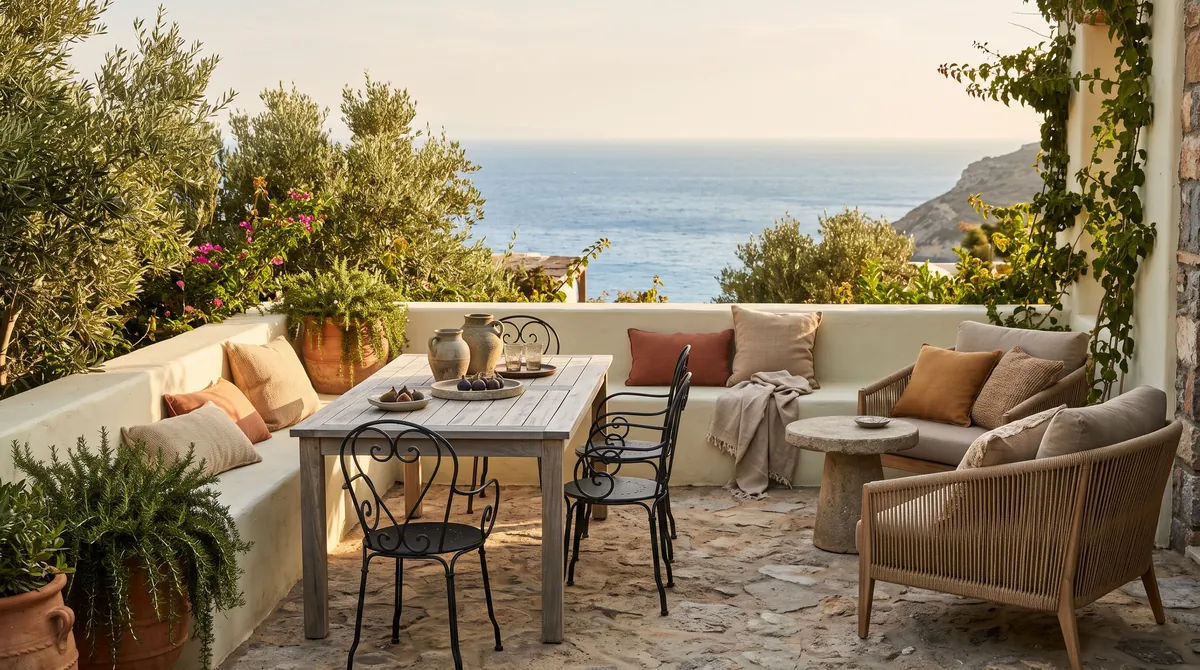
A stone or concrete table is the one piece that never moves in the wind, and on an exposed terrace that alone can justify it. It stays cool in summer, and an old stone top develops a patina that no other material matches. The weight is also its limit: check that a balcony or roof can carry it, and decide where it will stand before it arrives, because it will stay there. Stone can stain from oil, wine and citrus, so seal it and wipe up spills promptly.
Materials at a glance
| Material | Strengths | Watch out for | Best place |
|---|---|---|---|
| Teak | Dense and oily, weathers to silver grey | Needs regular oiling to keep its honey colour | Full sun, rain and the coast |
| Aluminium | Light, rustproof, powder coated | Can blow over in strong wind | Coasts and balconies |
| Wrought iron and steel | Heavy, classic and stable | Rust where the coating is damaged, faster by the sea | Sheltered or inland terraces |
| Stainless steel 316 | Resists salt air | Grade 304 is less resistant | Frames and fittings near the sea |
| Synthetic wicker | UV stabilised and weatherproof | Quality of fibre and frame varies | Exposed terraces |
| Natural rattan | Light, warm and comfortable | Damaged by sun and rain | Indoors or under a roof |
| Stone and concrete | Stays put in wind, cool to the touch | Very heavy, stains unless sealed | Windy terraces on solid ground |
Cushions, comfort and the siesta
Cushions make or break outdoor seating. Look for solution dyed acrylic outdoor fabrics, in which the colour runs right through the fibre instead of sitting on the surface, so they resist fading in strong sun. Inside, quick drying foam lets water drain through rather than holding it like a sponge. Even so, store cushions in a chest or a dry cupboard during rain and overnight when the dew is heavy; they last far longer, and you never sit down on a damp seat.
Comfort is a matter of measurements as much as materials, so try a chair before you choose it. The seat height should let your feet rest flat on the floor, and the depth should support your thighs without pressing behind your knees. Dining chairs need to be upright enough for a long lunch; lounge chairs can be lower and deeper. If there is room, add a daybed in the shade. Where the afternoon heat sends everyone indoors, a place to stretch out for a siesta in the open air is one of the real pleasures of a terrace.
The mistake with teak is not choosing silver or honey, but starting to oil it and then stopping.
Care through the year
Most outdoor furniture needs little more than mild soap, water and a soft brush a few times a season. Avoid harsh cleaners and pressure washers on wood and woven pieces, which can raise the grain or loosen the weave. On the coast, rinse metal with fresh water now and then to wash off the salt.
In winter, cover pieces with breathable covers or store them in a dry place. An airtight sheet that traps moisture can do more harm than the rain itself. On windy coasts, choose heavier pieces from the start, and keep light chairs stacked and secured when they are not in use.
Questions and answers
Should I oil teak or let it go grey?
Both are fine. Untreated teak weathers to a silver grey without losing its strength, while regular cleaning and oiling keeps the honey colour. The only thing to avoid is oiling irregularly, which leaves the surface patchy.
Is aluminium furniture suitable near the sea?
Yes, aluminium does not rust, and a good powder coating protects the surface. On very windy terraces, though, light chairs can blow over, so choose heavier designs or stack them away when the wind rises.
Can rattan furniture stay outside?
Natural rattan belongs indoors or under a roof, because sun and rain dry it out and damage the fibres. For open terraces, synthetic wicker made of UV stabilised polyethylene gives a similar look.
How do I stop outdoor cushions fading and going mouldy?
Choose solution dyed acrylic covers and quick drying foam, and store the cushions in a dry chest when it rains and overnight. Wash covers with mild soap and let them dry completely before you put them away.
Further reading in our network
- colistiaIndoor and outdoor living
Indoor and outdoor living, with ideas for terraces, gardens and the rooms in between.
- diseliaDesign, interiors and objects
Design, interiors and objects, including furniture made to be used every day.
Our articles are general information written with care. Building work, roof loads, electrics, gas and fire need qualified professionals and local permits; plant care depends on your own climate and soil.