
The Mediterranean kitchen: tiles, open shelves and a big table
In the south the kitchen is the heart of the house: a long wooden table, glazed tiles, open shelves and a cool larder. How to plan one that works hard and ages well.
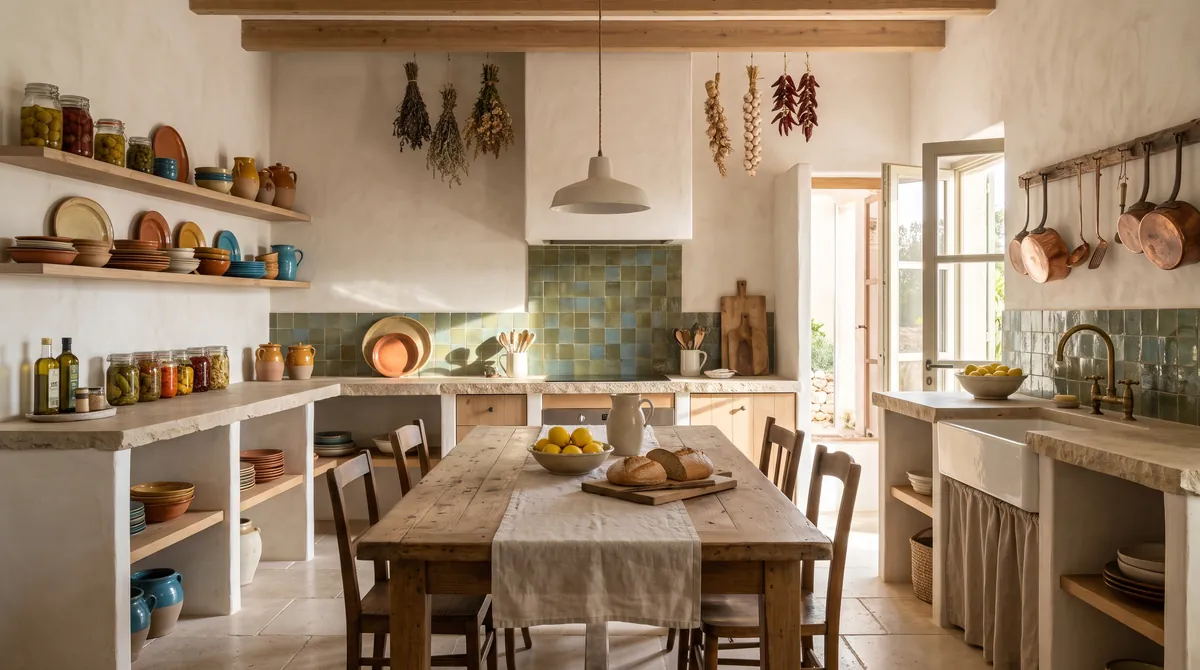
The first person up opens the shutters and the kitchen fills with a low, gold light. It falls across a long table scrubbed pale by years of use, a bowl of lemons, a loaf wrapped in a cloth. Bunches of garlic and dried peppers hang from a beam, the tiles behind the cooker shine where they have been wiped a thousand times, and the room smells of coffee, olive oil and yesterday’s rosemary. This is not a room you visit. It is the room where the house lives.
The table comes first
In a Mediterranean house the kitchen is the heart of the home, and the table is the heart of the kitchen. It is where vegetables are chopped and dough is rolled, where children do their homework, where neighbours sit with a glass of wine and where lunch stretches into the afternoon. So plan the room around the table rather than squeezing one in at the end.
A large wooden table with a thick, solid top is worth more than metres of fitted units. Oiled or soaped wood can be sanded back when it is marked, and it gains a soft, silvery patina over the years. Leave enough room to walk behind the chairs, roughly a metre between the edge of the table and the nearest cupboard or wall, so that someone can pass with a hot pan while others sit and talk.
Open shelves and honest storage
Open shelves replace many wall cupboards. Plates, bowls, glasses and jars stand where you can see and reach them, and the everyday crockery becomes part of the decoration. The trick is to keep on them what you actually use each day. Things that move are washed often and do not gather dust, while rarely used dishes are better kept behind doors.
- Shelves about 25 to 30 cm deep hold dinner plates and bowls without becoming dust traps.
- Solid wooden boards or plastered masonry shelves look calmer than thin boards on fussy brackets.
- Baskets hold onions, potatoes and bread while letting the air circulate.
- Terracotta pots and jars keep salt, wooden spoons and utensils close to the cooker.
- A plate rack above or beside the sink lets washed plates drip dry and stay to hand.
Surfaces that age with grace
The splashback is where a Mediterranean kitchen shows its colour. Glazed tiles, whether handmade, in the style of Moroccan zellige or painted in the manner of Italian majolica, are easy to wipe and reflect light onto the worktop. Their slight irregularities catch the light in a way machine-made tiles cannot, and a plain tile in deep green, ochre or blue can be just as effective as a pattern.
For worktops, stone, wood and tiles are the classic choices. Marble and limestone are cool for pastry and beautiful, but they are calcareous: lemon juice, vinegar and wine etch dull marks into the polish. A harder local stone often copes better. Wood is warm and kind to knives but needs regular oiling and care around the sink. Tiled worktops are traditional and resist heat, though their joints need sealing and cleaning. All of them develop a patina, and that is the point: choose materials that look better with the marks of use, not ones that must stay perfect.
Beneath the window, a deep ceramic sink takes the largest pan or a crate of tomatoes for washing, and it is hard to damage. Two practical warnings belong here too. Lime plaster is lovely in a kitchen, but near the cooker and sink it needs protection, either a tiled splashback or a sealed finish, because grease and splashes soak into an untreated surface. And cement tile floors, for all their charm, are porous: seal them before use and renew the sealer when water no longer beads on the surface, or spilt oil will leave lasting stains.
The cool larder
Long before refrigerators, every old house had a cool place for food. A pantry or larder was often set on the north side, with a ventilation opening covered by fine mesh, so that air could move while insects stayed out. In Spain such a cupboard or small room is called a fresquera. The idea is still a good one: a cool, dark, airy cupboard keeps potatoes, onions, wine, preserves and cheese far better than a warm kitchen shelf.
Olive oil belongs in a dark place too, away from the cooker and out of the sun, because light and warmth spoil its flavour. Herbs, garlic and dried peppers, by contrast, are happy hanging from a beam in bunches, where they dry slowly and are always within reach. Copper pans on a rail add warmth to the room and are there to be used, not just admired.
Hearths, ranges and the summer kitchen
Older houses were built around a hearth or a range, and where one survives it is worth keeping, even if you cook on a modern hob beside it. It gives the room a centre in winter and a place for slow pots of beans or stews. In some regions families also kept a separate summer kitchen outdoors, under a vine or a simple roof, so that the heat and smoke of cooking stayed out of the house during the hottest months. A shaded outdoor corner with a sink and a worktop brings the same relief today.
Planning a kitchen that works
Charm is no excuse for a kitchen that tires you out. A few principles keep the old character and the modern comfort together.
- Keep paths short. Sink, cooker and fridge should be a few steps apart, with worktop space between them, so you are not crossing the room with dripping hands.
- Plan the light. Put the main worktop near a window for daylight, and add warm, focused lamps over the table and the work areas for the evening.
- Protect the vulnerable spots. Tile or seal behind the cooker and sink, and seal porous floors before the first meal is cooked.
- Mix old and new. An old dresser, a modern oven, a second-hand table and new handmade tiles sit well together. A kitchen bought all at once tends to look like a showroom.
- Leave room to grow. Space for a basket on the floor, a hook for a new pan, a shelf that fills over time.
A Mediterranean kitchen is finished only when it looks as though it has always been in use.
In the end, the room will tell you whether it works. If people drift into it when they arrive, pull out a chair without being asked and stay longer than they meant to, you have built a Mediterranean kitchen, whatever the view from the window.
Questions and answers
Are open shelves practical in a real kitchen?
Yes, if you keep on them the things you use every day. Plates and glasses that are used and washed often do not collect dust. Keep rarely used dishes behind doors, and avoid open shelves right above the cooker, where grease settles.
Is marble a good kitchen worktop?
It is beautiful and cool for pastry, but marble is sensitive to acids such as lemon juice, vinegar and wine, which leave dull etch marks. If you love it, accept the patina, or choose a harder local stone for the busiest areas.
Can I use lime plaster in a kitchen?
Yes, but protect it where splashes and grease land, with tiles behind the cooker and sink or a sealed finish. Elsewhere lime plaster works well and lets the walls breathe.
How do I keep olive oil fresh?
Store it in a cool, dark place, away from the cooker and the window, in a closed bottle or tin. Light, warmth and air all spoil its flavour over time.
Further reading in our network
- colistiaIndoor and outdoor living
Indoor and outdoor living, with ideas for rooms and terraces that are made to be used every day.
- cucianaItalian fine dining in Europe
Italian fine dining, from regional cooking to the dishes worth making in your own kitchen.
Our articles are general information written with care. Building work, roof loads, electrics, gas and fire need qualified professionals and local permits; plant care depends on your own climate and soil.