
A calm Mediterranean bedroom: linen, shutters and white walls
A bedroom made for heat is dark when you want it, airy at night and almost empty. How shutters, linen, lime and a ceiling fan make a room for deep rest, in summer and in winter.
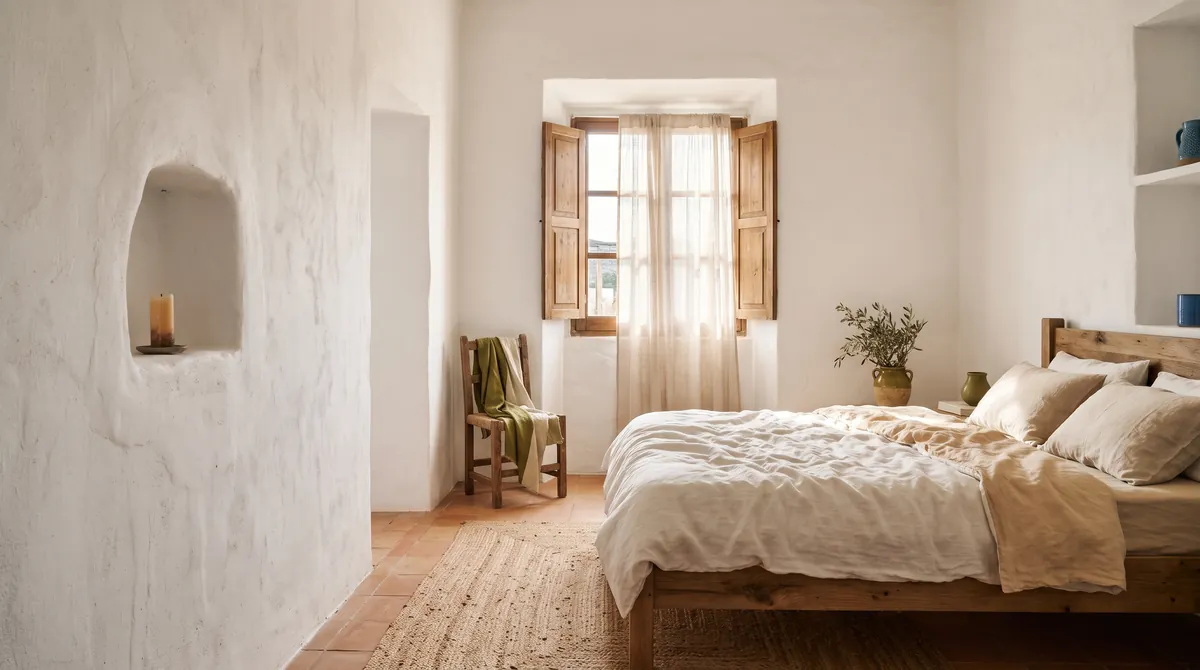
After lunch the house slows down. In the bedroom the shutters are pulled almost closed, leaving a few bright lines that creep slowly across a white wall. The ceiling fan turns with a soft, steady hum. The terracotta floor is cool enough to stand on barefoot, and the linen sheet, washed so often it has gone as soft as old cotton, feels cool against the skin. Outside it is hot and loud with cicadas. In here there is only the fan, the dim light and an hour of rest.
A room designed for heat
The traditional southern bedroom was built for the hottest part of the year, and that shapes everything in it. Ceilings were high, so that warm air could rise above the bed. Walls were thick and lime-washed, white or in warm earth tones, and the furniture was kept to a minimum, because every extra object holds warmth and gathers dust. The room was meant for sleeping, resting and dressing, and very little else.
That simplicity is what makes it so restful. A simple wooden or iron bed, a chair, a basket for blankets and a small table beside the bed are enough. Niches built into the wall take the place of bedside cabinets and shelves, holding a lamp, a book and a glass of water without adding another piece of furniture to the floor. Clothes live in a wardrobe or a chest elsewhere if possible, so that the bedroom itself stays almost empty.
Darkness when you want it
Shutters and blinds are the most important furnishing in the room. Closed during the hot hours, they keep the sun off the glass and darken the room for a midday rest, and opened at night they let in the cooler air. Louvred shutters are especially useful, because you can close them and still let air pass through the slats.
Inside, linen curtains do a different job. They filter daylight rather than block it, softening the early morning sun into a pale glow and moving gently in the evening breeze. Unlined linen in white, sand or a faded colour gives the room that slightly hazy light that makes it feel cooler than it is.
Air, fans and nets
A ceiling fan is the quiet hero of a Mediterranean bedroom. It does not cool the air, but moving air carries heat away from your skin, and on a still night that is often enough to let you fall asleep. Choose one that runs quietly at its lowest setting, and make sure it hangs well clear of your head when you sit up in bed. Many fans can also run in reverse, which in winter pushes warm air gently down from the ceiling. Have it fitted by a qualified electrician, with a secure fixing in the ceiling.
Where windows stand open at night, a light canopy or mosquito net over the bed keeps insects away without closing up the room. Hung from a single hook in the ceiling or from a simple frame around the bed, a cotton or linen net also gives a soft, tented feeling that many people find calming.
Linen, percale and what lies on the bed
Bedding is the part of the Mediterranean bedroom that is easiest to borrow. Linen is made from flax fibre. It breathes, absorbs moisture and becomes softer with every wash, which is why linen sheets feel cool and dry on a warm night. Washed linen has a relaxed, crumpled look, so there is no need to iron it, and that unfussy character suits the room.
Cotton percale is the alternative for anyone who prefers something crisp. Its tight, plain weave feels smooth and cool, and it keeps a fresh, pressed look. Many households use both: percale for the bottom sheet, and a linen duvet cover or a single linen sheet on top in high summer.
- Wash linen at a moderate temperature and leave out fabric softener, which coats the fibres.
- Dry it on a line and smooth it by hand while it is still slightly damp if you like a neater finish.
- Store spare sets in a drawer or chest with a lavender sachet, which keeps them smelling fresh.
- Keep a light cotton blanket at the foot of the bed for the cooler hours before dawn.
Walls, floors and evening light
Lime-washed walls give the bedroom its soft, matt glow. Lime is breathable and has a gentle, cloudy surface, and in white or a warm, chalky tone it reflects light without glare. The floor is ideally terracotta or stone, cool in summer, with a cotton or jute rug laid down beside the bed for the colder months.
In the evening, light should be warm and low. Small lamps with linen or paper shades at bed height are kinder than a bright light in the ceiling, which flattens the room and makes it feel like a workplace. Two lamps, one on each side of the bed, plus a small lamp or a candle in a niche, are all most bedrooms need.
A Mediterranean bedroom is furnished with shade, air and linen; almost everything else is optional.
Sleeping cool
A cool room makes sleep more comfortable for most people. Many sleep guides suggest a bedroom temperature of roughly 16 to 19 °C, which is general guidance rather than a rule, and in a southern summer it is often more than a house can reach. The old habits still make the biggest difference: shutters closed through the day, windows wide open at night, a fan for still air and bedding that breathes. Keeping lamps, screens and other sources of heat to a minimum in the evening helps too.
When winter comes
It is easy to forget that Mediterranean houses can be cold in winter. Thick walls that are such a gift in high summer hold the chill in the dark months, and stone floors that feel wonderful in the heat are icy under bare feet. So the bedroom changes with the seasons. From November, wool blankets and heavier covers come out of the chest, the rug goes down beside the bed, and the linen curtains may give way to heavier cotton ones. A woollen throw at the foot of the bed and a pair of slippers by the door belong to the Mediterranean bedroom as much as the summer linen does.
Questions and answers
Is linen bedding worth it in a hot climate?
For many people, yes. Linen breathes, absorbs moisture and dries quickly, so it feels cool and dry on warm nights, and it becomes softer with every wash. If you prefer a smoother feel, cotton percale is a good alternative.
What temperature should a bedroom be?
Many sleep guides suggest roughly 16 to 19 °C as general guidance. In a hot summer that is hard to reach, so focus on shade by day, open windows at night and a fan to move the air.
How do I darken a bedroom without shutters?
Combine an unlined linen curtain with a lined curtain or blind behind it. The first filters daylight in the morning, the second darkens the room when you want to rest. External blinds are better still, because they also keep heat off the glass.
Do I need to iron linen sheets?
No. Washed linen has a naturally relaxed, crumpled look that suits a Mediterranean bedroom. If you like it smoother, smooth it by hand while it is still slightly damp.
Further reading in our network
- tifaniaBeautiful places to stay
Boutique hotels and beautiful places to stay, many of them with bedrooms in this calm southern spirit.
- colistiaIndoor and outdoor living
Indoor and outdoor living, with ideas for furnishing rooms that feel good in every season.
Our articles are general information written with care. Building work, roof loads, electrics, gas and fire need qualified professionals and local permits; plant care depends on your own climate and soil.