
Keeping a house cool the Mediterranean way
Thick walls, closed shutters, night air and a midday rest: the old ways of staying cool in southern Europe still work, and most of them can be brought into a modern home.
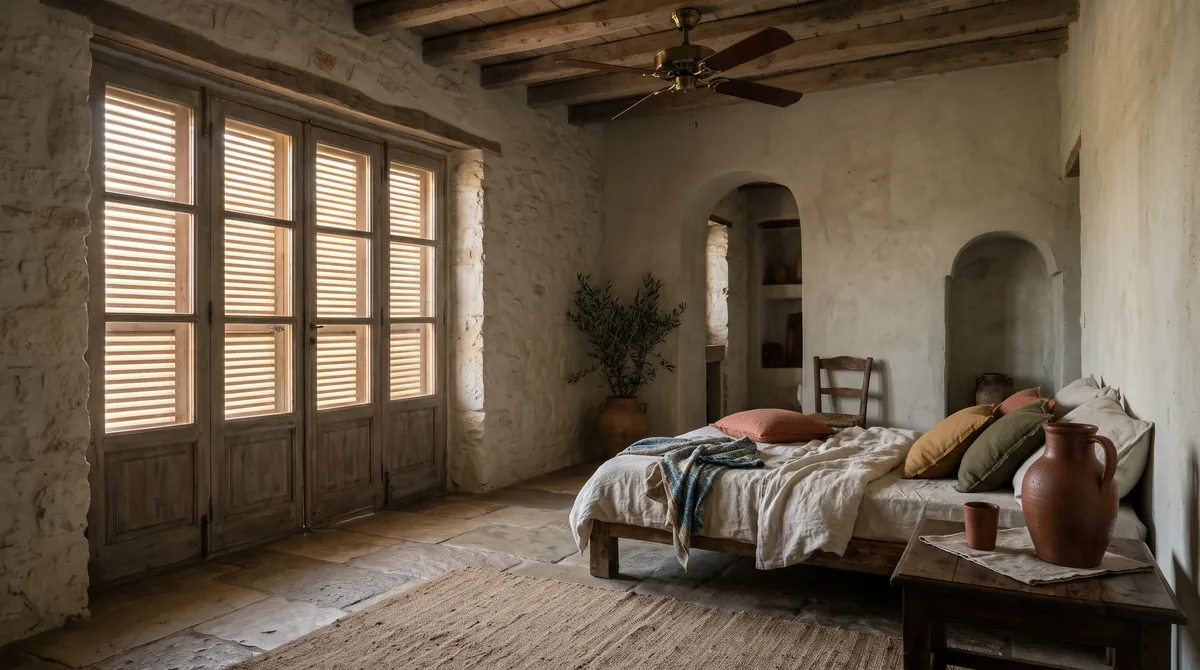
By mid-morning in high summer the village goes quiet. One by one the shutters swing closed and latch with a dry click, and behind them the houses slip into a green, striped dusk. Inside, the stone floor still holds the coolness of the night. A fan turns slowly overhead, a jug of water stands sweating on the table, and the cicadas outside sound further away than they are. Nobody has switched on an air conditioner. The house itself is doing the work, as it has for generations.
Thermal mass: the wall that keeps time
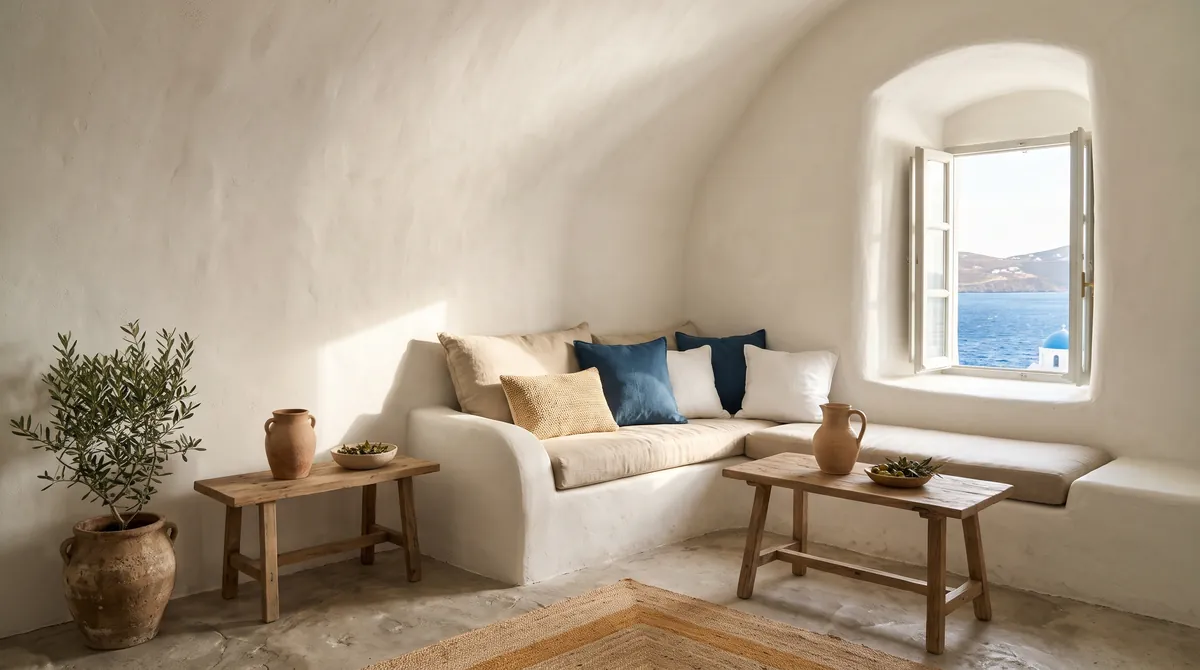
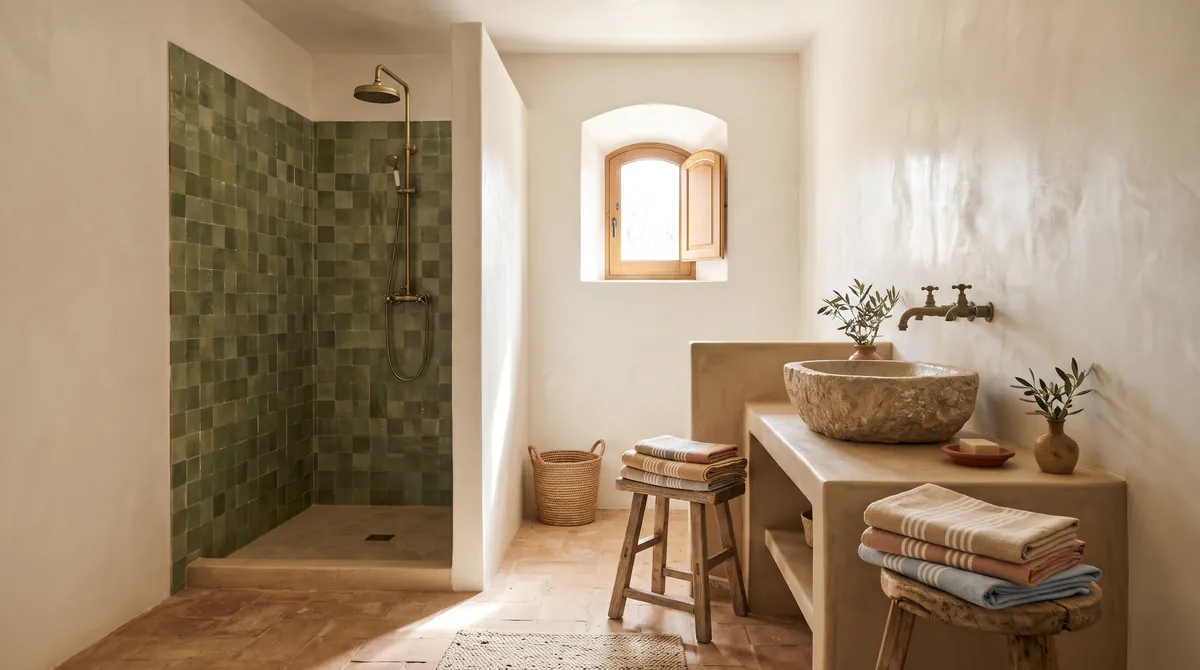
The first ally is weight. Thick walls of stone or earth absorb heat during the day and release it slowly at night, with a delay of many hours. In practice this means the heat of a summer afternoon reaches the inner face of the wall long after the sun has gone down, when you can open the windows and let it escape. Floors of stone and tiles work the same way, which is why they feel cool underfoot even in the hottest weeks.
Mass is not magic, though. A heavy house that is never aired at night slowly fills with warmth and then stays warm, which is why old houses can feel stuffy once the rhythm of opening and closing is lost. Thermal mass and night ventilation belong together: one stores the coolness, the other recharges it.
Stop the sun before it reaches the glass
Sunlight that passes through a window turns into heat inside the room, and once it is in, it is hard to get out again. That is the reason behind the most important rule of the Mediterranean house: shade outside the glass. Shutters closed during the hot hours stop heat far better than curtains inside, because curtains only catch the heat after it has entered. Awnings over terraces and sunny windows do the same job while keeping some of the view.
The old builders helped further by keeping windows small on the south and west façades, where the sun is strongest, and by whitewashing walls and roofs. Whitewash reflects much of the sunlight that would otherwise warm the masonry. West is the side to watch: the low afternoon sun reaches deep into rooms just when the air is already at its hottest.
Moving the air: night, cross and stack ventilation
Air movement is the second half of the system, and it costs nothing but attention. Three effects do most of the work.
- Night ventilation. Open the windows when the air outside is cooler than inside, usually from late evening, and close them again in the morning before the outside air warms up.
- Cross ventilation. Openings on opposite sides of the house let a breeze run straight through. Open windows on two facing sides, ideally the shaded one and the one that catches the breeze, and leave the internal doors open between them.
- The stack effect. Warm air rises and escapes through high openings, drawing cooler air in lower down. Stairwells and courtyards work like chimneys, so a small window or skylight at the top of the stairs, opened at night, pulls air through the whole house.
Ceiling fans add a gentle breeze when the air is still. Moving air makes skin feel cooler, even though the temperature of the room does not change, and a fan uses only a small fraction of the energy of an air conditioner. Because a fan cools people rather than rooms, switch it off when you leave.
Courtyards, water and living shade
Where there is space, the courtyard is the great cooling device of the Mediterranean. Shaded by walls on all sides, planted and often with a fountain or a basin, it cools the air by evaporation: water drawn from the leaves and from the surface of the basin takes heat with it as it turns to vapour. The rooms that open onto the courtyard breathe that cooler air at night and in the early morning.
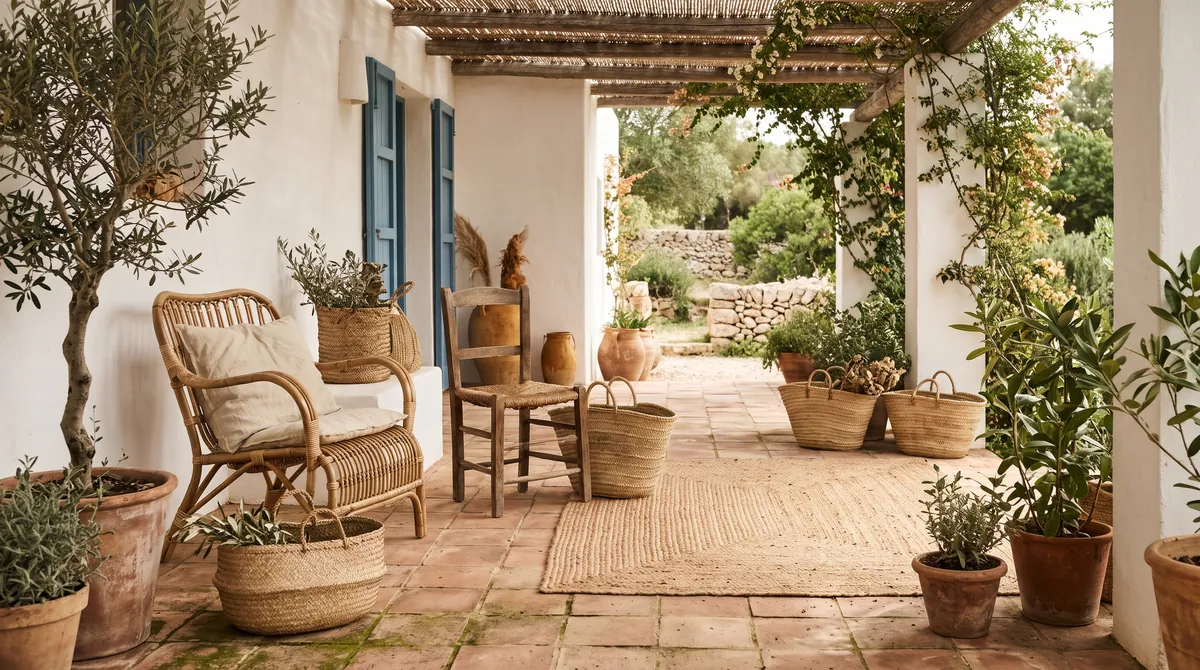
Plants do the same work on a smaller scale. A deciduous vine on a pergola, such as a grapevine or a wisteria, gives dense shade in summer and drops its leaves in autumn to let the low winter sun in. Trees or climbers on the west side of a house shield the wall from the hottest sun of the day. Even a few large pots of greenery on a terrace, watered in the evening, soften the heat that radiates back from the paving.
The rhythm of a summer day
The Mediterranean way of keeping cool is as much a timetable as a technique. Cooking, shopping and work happen in the cooler hours, the middle of the day is for rest, and life moves outside again in the evening. A simple daily pattern makes even an ordinary house noticeably more comfortable.
| Time of day | Windows and shutters | Daily life |
|---|---|---|
| Early morning | Windows and shutters open while the air is still cool | Cooking, cleaning, errands and outdoor work |
| Late morning | Windows closed, shutters closed on the sunny sides | Indoor tasks in the coolest rooms |
| Midday and afternoon | Everything closed, fans on in the rooms in use | A long lunch, then rest in a darkened room |
| Evening | Shaded sides opened once the air outside is cooler | Dinner outdoors, a walk, watering the plants |
| Night | Windows open for cross ventilation, high openings open | Sleep, with a fan on low if needed |
Adjust to your own house: the moment to open up is when it is cooler outside than inside, not a fixed hour.
Shade outside the glass, air at night, rest at midday: the oldest cooling system in Europe needs no plug.
A checklist for modern homes
Most of these principles can be added to a house of any age, often step by step and without major building work.
- Fit external blinds or shutters on the south and west windows first, where they make the biggest difference.
- Choose a light-coloured roof when the roof is renewed; a pale surface reflects sunlight instead of storing it.
- Insulate the roof, since rooms under it take the full force of the summer sun. Ask a qualified professional about ventilation and roof loads before work starts.
- Plant trees or climbers on the west side to shade walls and windows in the afternoon.
- Replace old warm bulbs with efficient LED lamps, which give off far less heat for the same light.
- Close unused rooms during the day, so that the coolness you have stored is not shared with spaces nobody needs.
Small spaces and flats
In a flat with windows on one side only, cross ventilation is harder, but not impossible: opening the door to a cool stairwell at night, where it is safe to do so, can draw a draught through the whole home. Light-coloured external blinds on a balcony, a cotton awning and a few pots of greenery reduce the heat that reaches the glass. And a ceiling or standing fan beside the bed often makes the difference between a restless night and a good one.
Questions and answers
Should I keep the windows closed during a heatwave?
During the day, yes, with shutters or blinds closed on the sunny sides, as long as it is hotter outside than inside. Open everything again in the evening and at night, when the outside air is cooler.
Are curtains enough to keep the heat out?
They help a little, but they catch the heat only after the sun has passed through the glass. External shutters, blinds or awnings stop it before it enters, which is why they work so much better.
Does a ceiling fan actually lower the temperature?
No, it lowers the temperature you feel. Moving air carries heat away from your skin, so you feel cooler at the same room temperature. Switch the fan off when nobody is in the room.
Which side of the house needs the most shade?
Usually the west, because the low afternoon sun shines deep into the rooms when the air is already at its warmest. South windows come next, and an awning or overhang above them works well because the summer sun stands high.
Further reading in our network
- sunalivSolar and smart living
Solar and smart living, with ideas for running a comfortable home on less energy.
- MurosoArchitecture and interiors
Architecture and interiors, including the building traditions that shape how houses handle heat and light.
Our articles are general information written with care. Building work, roof loads, electrics, gas and fire need qualified professionals and local permits; plant care depends on your own climate and soil.