
A herb garden from the garrigue: rosemary, thyme, sage and oregano
The best kitchen herbs come from the stony scrublands of the Mediterranean. Grow them lean, sunny and a little neglected, and they repay you with flavour.
Walk across a limestone hillside in the south of France on a hot morning and every step releases a different smell. Thyme crushed under your boots, the resin of rosemary, the dusty sweetness of wild oregano, a sudden note of fennel from a ditch. Nothing here is watered and nothing is fed, and the plants grow low and tough between the stones, their flavour concentrated by sun and wind. This is where most of our kitchen herbs come from, and the closer your herb garden comes to that hillside, the better it will taste.
Plants of the maquis and the garrigue
Many of the herbs we cook with are native to the scrublands of the Mediterranean. The maquis is the taller, denser kind, a thicket of shrubs that can reach head height. The garrigue is lower and more open, often on limestone, with cushions of aromatic plants and bare stone between them. Rosemary, thyme, sage, oregano and marjoram, savory, bay laurel and fennel all belong to this world. Rosemary has even been moved by the botanists: since 2017 it has been placed in the genus Salvia, as Salvia rosmarinus, which makes it a close relative of garden sage.
Basil is the exception. It is an annual from warmer regions of Asia, not a shrub of the hillsides, and it wants warmth, richer soil and far more water than its Mediterranean neighbours. Grow it in a pot of its own near the kitchen door, rather than in the stony bed where the rosemary thrives.
Lean soil, stronger flavour
The most common mistake with Mediterranean herbs is kindness. Rich soil, regular feeding and daily watering produce large, soft, pale plants with a weak flavour, and they often rot in their first wet winter. The aroma is strongest in plants that grow slowly in lean, well drained ground and full sun. So hold back. Mix grit into heavy soil, choose the sunniest spot you have, and once the plants are established, water them only in a long dry spell. A gravel mulch around the stems keeps the crowns dry and reflects heat back into the leaves.
Plant in spring where winters are cold and wet, and in autumn in the warm south, so that roots grow with the winter rain. Buy small, compact plants rather than large, soft ones that have been pushed on under glass: they settle faster and are tougher from the start.
Spirals, raised beds and pots
You do not need a hillside. Almost any structure that drains well and catches the sun will do:
- A herb spiral: a coil of stones, about 1.5 to 2 m across, that rises towards the centre. The dry, sunny top suits rosemary and thyme, while the lower turns stay a little moister for oregano and marjoram.
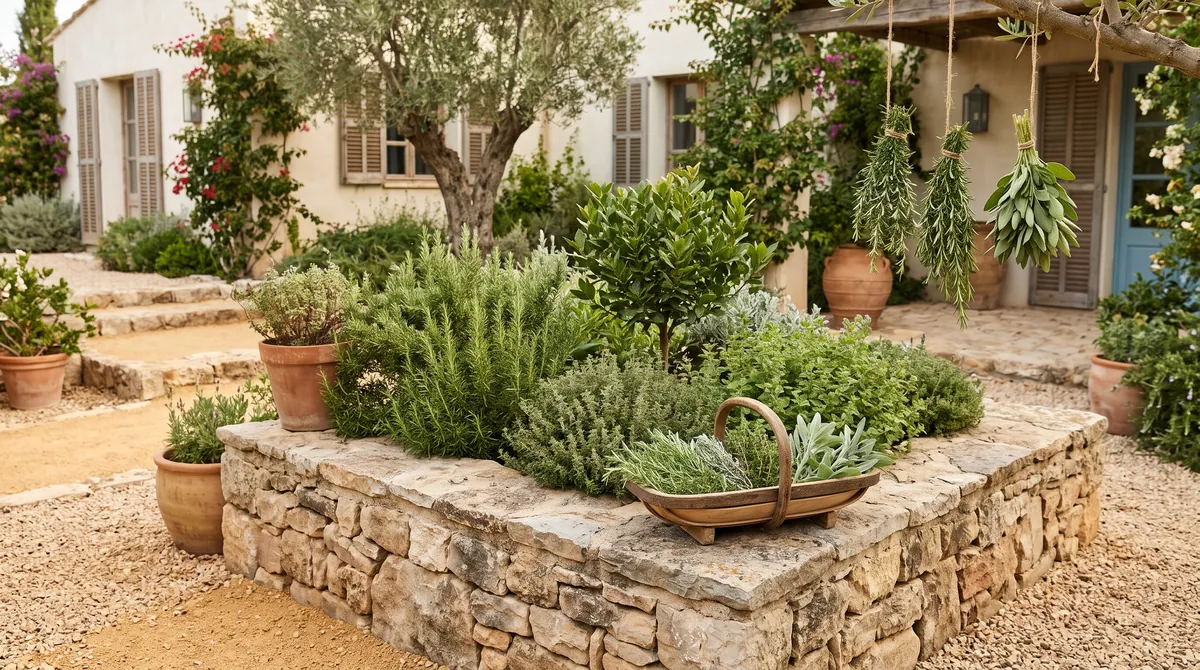
- A raised bed filled with soil and plenty of grit lifts roots above the winter wet and is easy to reach from a path or terrace.
- Pots and troughs on a balcony: terracotta suits herbs well, with a gritty compost and a layer of gravel on top. Group the pots so that they shade each other’s sides in high summer.
- A dry stone wall or the edge of a gravel path, where thyme and savory can seed into the gaps.
Wherever you build it, keep the herb garden close to the kitchen. A rosemary bush by the door is cut every day; one at the far end of the garden is visited only when you remember it.
The herbs, one by one
- Rosemary: an evergreen shrub, upright or trailing, with small blue flowers from late winter. Very drought tolerant, but it hates wet feet.
- Thyme: low, woody cushions with tiny leaves, from upright garden thyme to creeping kinds for paths and steps.
- Sage: soft, grey-green, slightly furred leaves on a short-lived shrub that becomes leggy after a few years.
- Oregano and marjoram: close relatives, the first wilder and sharper, the second sweeter and more tender to frost.
- Savory: the winter kind is a small, woody plant with a peppery taste, a classic with beans.
- Bay laurel: a slow evergreen tree or clipped shrub, ideal in a large pot; a few leaves go a long way.
- Fennel: a tall, feathery perennial that seeds freely, its seeds, leaves and stems all carrying the same aniseed flavour.
Harvesting and drying
Pick herbs in the morning, once the dew has dried but before the heat of the day, when the leaves are dry and full of aroma. For many herbs the aroma is strongest just before they flower, so that is the moment to cut a larger harvest for drying. Regular cutting through the season is good for the plants: it keeps them bushy and stops them from growing tall and bare. Take the soft tips, a few centimetres at a time, and never strip a plant completely.
To dry them, tie small bunches and hang them upside down in a shaded, airy place, out of direct sun, which bleaches both colour and flavour. When the leaves crumble between your fingers, rub them off the stems and store them in closed jars away from the light.
Herbes de Provence is simply a blend of such dried herbs. It often includes thyme, rosemary, savory and oregano, and sometimes lavender. Mix your own from the garden, in the proportions you like best, and use it on grilled vegetables, lamb or a tray of roast potatoes.
Pruning woody herbs
Rosemary, thyme and sage are small shrubs, and like lavender they share one weakness: they rarely sprout again from old, bare wood. Prune them after flowering, cutting back the flowered shoots and a little of the leafy growth, and always leave green leaves on every branch. A light trim in spring tidies any winter damage. If a sage or thyme has become a sprawling tangle with a bare centre after several years, take cuttings in summer and replace it rather than cutting it hard.
The closer your herb garden comes to a stony hillside, the better it will taste.
Bees and butterflies
A herb garden left to flower becomes one of the busiest corners of any garden. Thyme, oregano, savory and rosemary are full of bees on warm days, and butterflies settle on the flower clusters of marjoram and the wide, flat umbels of fennel. It is worth letting part of every plant flower even while you cook with the rest. The harvest is a little smaller, but the garden hums with life from spring to late summer.
Questions and answers
Can I grow rosemary, thyme and basil in the same pot?
It is better not to. Rosemary and thyme want lean, dry compost and little water, while basil needs richer soil and regular watering. Together, one of them always suffers, so give basil its own pot and keep the woody herbs together.
Why has my thyme died over winter?
Most often because of wet rather than cold. Thyme sitting in heavy, waterlogged soil rots at the roots. Plant the next one in very gritty soil, in a raised bed or pot, with gravel around the stems. Old, woody plants also tend to die back and are best replaced every few years.
Is rosemary really a sage now?
Botanically, yes. Since 2017 rosemary has been placed in the genus Salvia, as Salvia rosmarinus. In the garden and the kitchen nothing has changed, and you will still find it under its old name in many places.
When should I plant basil outside?
Only once the nights are warm, usually well after the woody herbs have started growing. Basil stops growing and blackens in cold weather, so in cooler climates keep it on a sunny windowsill until early summer.
Further reading in our network
- cucianaItalian fine dining in Europe
Italian fine dining and regional cooking, where fresh herbs from the garden find their way onto the plate.
- berbecuGrilling and barbecue
Grilling and barbecue, with ideas for cooking over fire where rosemary, thyme and bay add their scent to the smoke.
Our articles are general information written with care. Building work, roof loads, electrics, gas and fire need qualified professionals and local permits; plant care depends on your own climate and soil.