
Lemon and orange trees in pots: a year of care
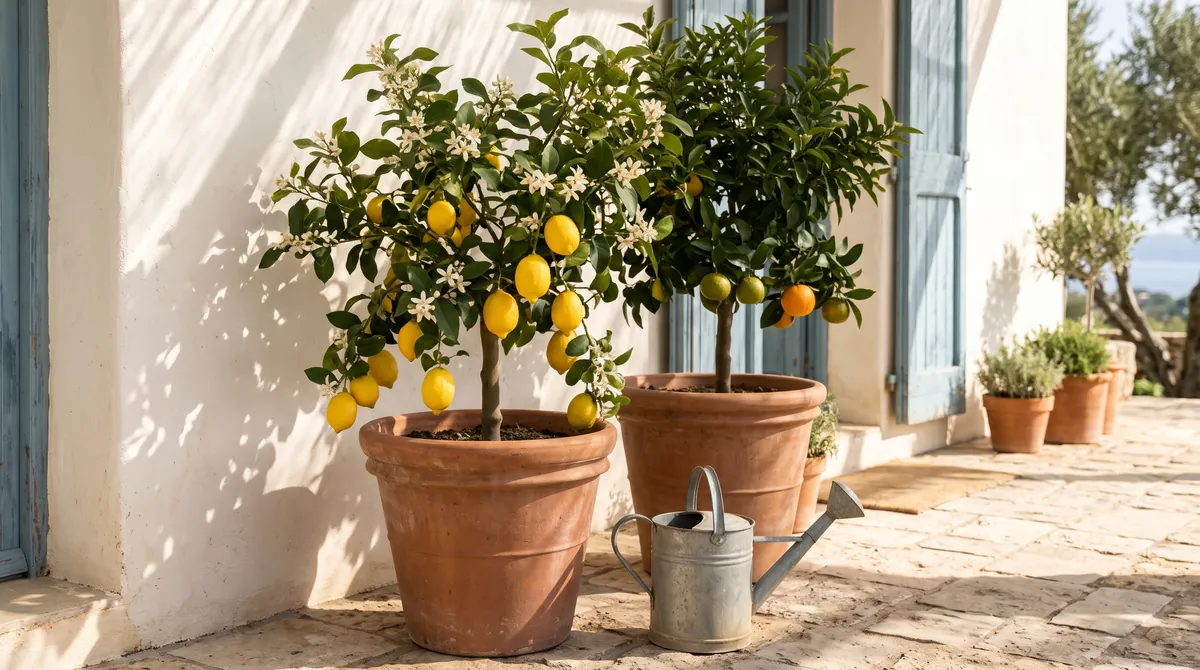
A lemon tree in a terracotta pot brings scent, colour and fruit to any terrace. The secret lies in the compost, the watering can and a careful winter.
In Seville in spring, the scent arrives before you notice the trees. The bitter oranges that line the streets and courtyards come into blossom, and the city fills with azahar, a sweet, heavy perfume that drifts through open doors and over tiled patios. A lemon tree in a pot on your own terrace offers a small version of the same pleasure. On a warm evening a few open flowers are enough to scent the table, and on the same branch you may find buds, tiny green fruit and ripe yellow lemons all at once.
From Asia to the Mediterranean courtyard
Citrus are evergreen trees that originally come from Asia. They reached the Mediterranean slowly, over many centuries, and became so much a part of its gardens that it is hard to imagine an Andalusian patio without them. The family is large: lemons, bitter oranges, sweet oranges, mandarins and the small kumquats. The bitter or Seville orange, Citrus × aurantium, is far too sour to eat fresh, but it makes the classic marmalade.
In northern Europe, where winters are too cold for citrus outdoors, orangeries were built from the seventeenth century: tall, bright halls with large windows facing the sun, where citrus in tubs and pots could spend the winter. The idea still works today on a smaller scale, in a conservatory, a garden room or a cool, light stairwell.
Choosing a pot and compost
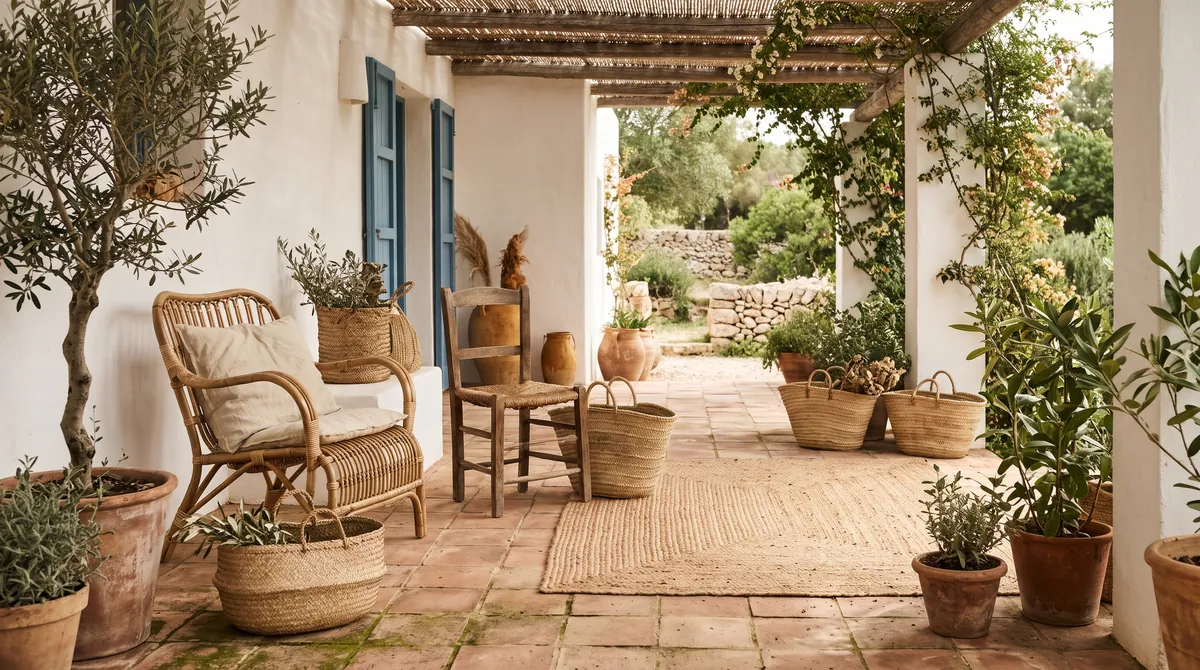
Citrus roots need air as much as water, so drainage comes first. Choose a pot with large drainage holes, a little wider than the root ball rather than much bigger, and stand it on feet. Terracotta is the traditional choice and suits the trees well: it breathes, keeps the roots cooler and shows quickly, by its paler colour, when the soil is drying out. Plastic or glazed pots hold water longer, which can help in hot, windy places but makes overwatering easier.
Fill with a free-draining compost made for citrus, or a good potting soil mixed with grit or fine bark so that water runs through freely. Repot young trees every two or three years in spring. For older trees in large pots, scrape away the top few centimetres of soil each spring and replace it with fresh compost instead.
Water, feed and read the leaves
More potted citrus suffer from too much water than from too little. In summer they need regular watering, often every few days in the heat, but let the top of the compost dry slightly before you water again. Water thoroughly until it runs out of the base, then empty the saucer. A pot that stands in water for days drowns its roots, and the first sign is often yellowing, falling leaves.
Citrus are hungry during the growing season. Feed from spring to late summer with a fertiliser made for citrus, following the dose on the pack, and stop in autumn so that the tree can rest. The leaves tell you a great deal:
- Yellow leaves with green veins often point to a lack of iron. A citrus fertiliser with trace elements usually corrects it, and because very hard tap water can make it worse, collect rainwater where you can.
- Older leaves turning pale all over suggest that the tree is short of food, or that it has been sitting too wet.
- Leaves dropping suddenly usually follow a shock: a move from outdoors into a warm room, a cold draught or a spell of dry roots.
- Curled leaves in summer heat can mean thirst, or aphids feeding on the young shoots.
Flowers, fruit and patience
Lemons are the most generous citrus in pots, because they can flower and carry fruit at the same time for much of the year. Oranges and mandarins tend to flower mainly in spring. Whatever the kind, fruit takes many months to ripen, so a lemon that sets in spring may only turn yellow in winter. Do not be alarmed if a young tree drops many of its tiny fruitlets: it is shedding what it cannot carry. A light pruning in spring, removing crossing shoots and shortening any that spoil the shape, keeps the crown compact and lets light into the centre.
A careful winter
Winter decides whether a potted citrus thrives. In mild coastal areas, where frost is rare, the trees can stay outdoors all year in a sheltered, sunny corner. Elsewhere they need a bright, cool but frost free place: an unheated conservatory, a greenhouse kept just above freezing, a light stairwell or a cool room with a large window. A warm, dark room is the worst choice of all. The tree tries to keep growing without enough light, becomes weak and drops its leaves.
Citrus dislike sudden changes. Bring them in before the first frost and move them out again in spring once the nights are reliably mild, and in both directions give them a week or two in a halfway place, such as a shaded terrace or a porch, to adjust. In winter, water much less, only when the compost is dry a few centimetres down, and do not feed at all.
A warm, dark room is the worst place a lemon tree can spend the winter.
A year with a citrus in a pot
| Season | Where | Water | Feed and care |
|---|---|---|---|
| Spring | Outdoors once nights are mild, at first in light shade | Increase as new growth starts | Start feeding, prune lightly, repot or refresh the top layer |
| Summer | Full sun, sheltered from strong wind | Regularly, letting the top dry slightly | Feed regularly and check for pests |
| Autumn | Outdoors until the first frost is forecast | Reduce gradually | Stop feeding at the end of summer |
| Winter | Bright, cool and frost free; outdoors only in mild coastal areas | Sparingly, when the compost is dry below the surface | No feeding; keep away from radiators and draughts |
A guide for typical conditions. Watch the tree and the compost rather than the calendar.
Pests and how to deal with them
Under cover in winter especially, citrus attract a few familiar pests. Scale insects look like small brown bumps on the stems and the undersides of leaves; aphids cluster on soft new shoots; mealybugs hide in the leaf joints under a white, cottony fluff. All of them leave sticky honeydew, on which a black, sooty mould can grow. Check the trees every week or two. Small infestations can simply be wiped off with a soft cloth or a cotton bud, and a mild soap solution, wiped or sprayed on, deals with most of the rest. Healthy trees in good light are always less troubled than weak ones.
Questions and answers
Which citrus is easiest in a pot?
Lemons and kumquats are good choices to start with, and mandarins stay fairly compact. Lemons have the bonus of flowering and fruiting through much of the year. Whatever you choose, a healthy young tree with glossy leaves is a better start than an old tree that has spent years in a small pot.
Why is my lemon tree dropping its leaves in winter?
Usually because its place is too warm and too dark, or because it was moved too suddenly. Overwatering in winter is another common cause. Move it somewhere brighter and cooler, water only when the compost is dry a few centimetres down, and new leaves usually follow in spring.
Can I grow citrus indoors all year?
It is difficult. Citrus need much more light than a room usually gives, and a summer outdoors makes them stronger, helps them flower and keeps pests down. A bright conservatory comes closest, but if you can, give the tree its summer on a balcony or terrace.
How long does a lemon take to ripen?
Many months. A fruit that sets in spring often does not turn fully yellow until the following winter. Ripe lemons can hang on the tree for some time, so you can pick them as you need them.
Further reading in our network
- andaluisTravel and sights in Andalusia
Travel and sights in Andalusia, from the orange-scented patios of Seville to the white towns of the hills.
- colistiaIndoor and outdoor living
Indoor and outdoor living, with ideas for terraces, conservatories and the bright rooms where plants spend the winter.
Our articles are general information written with care. Building work, roof loads, electrics, gas and fire need qualified professionals and local permits; plant care depends on your own climate and soil.