
The dry garden: planting for sun and very little water
A gravel garden works with the Mediterranean year rather than against it. Good drainage, autumn planting and a mulch of stone do most of the work, and the plants do the rest.
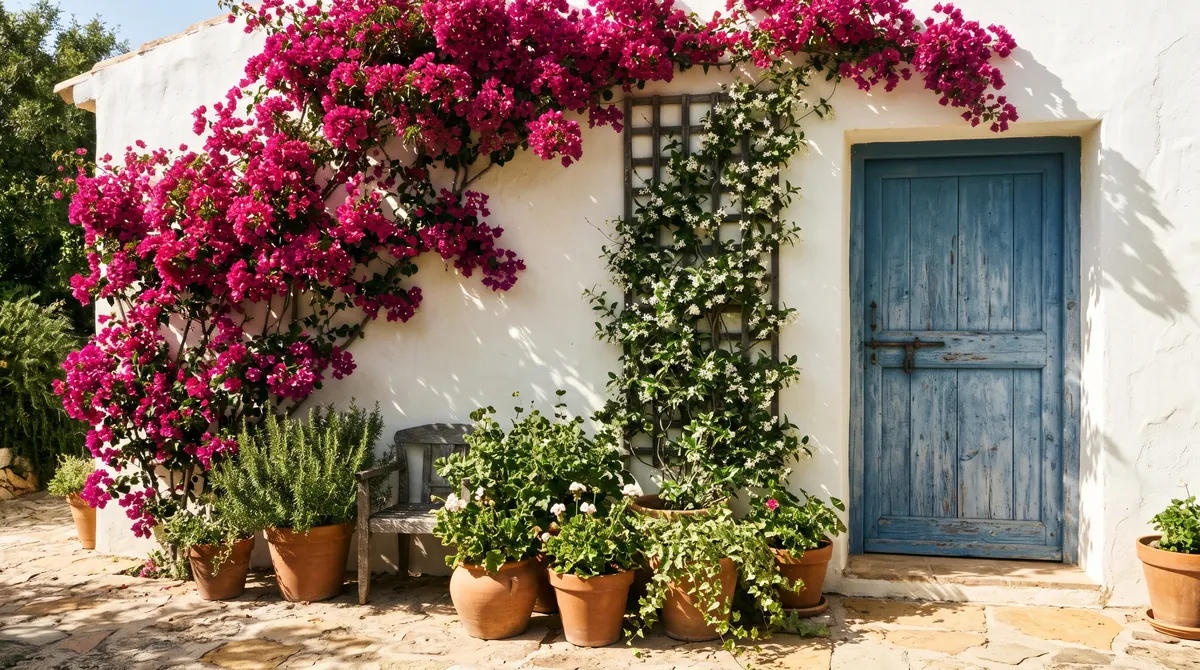
At four in the afternoon in late July, a dry garden smells before it looks like anything at all. The heat lifts the resin from the cistus and a sharp, camphor note from the rosemary, and the gravel under your sandals gives back the warmth it has stored since morning. The plants look a little grey, a little folded in on themselves, and that is exactly the point. They are not suffering. They are resting, the way the whole Mediterranean rests in summer, waiting for the first autumn rain to turn the garden green again.
A garden that follows the Mediterranean year
The Mediterranean climate turns the northern European garden calendar on its head. Winters are mild and wet, summers hot and dry, often for months without a drop of rain. Plants that evolved here grow when water is available, from autumn to late spring, and slow down or stop altogether in the heat. A dry garden, also called a gravel garden, simply accepts this rhythm. Instead of fighting summer with a hose, it is planted with species that have their own ways of coping, and laid out so that what little rain falls reaches the roots and stays there.
Once you know what to look for, the adaptations are easy to read in the plants themselves:
- Small, leathery leaves lose less water than broad, soft ones, which is why the leaves of myrtle and olive feel almost like paper between your fingers.
- Silver and hairy leaves reflect light and hold a thin layer of still air, so santolina, lavender and the woolly phlomis stay cooler than their green neighbours.
- Aromatic oils in rosemary, sage, thyme and cistus are part of the same defence against heat, and they give the garden its scent.
- Deep roots follow moisture far below the dry surface, which is why an established carob or fig needs no help at all.
- A summer rest: some plants drop part of their leaves or simply stop growing in the hottest weeks, and wake again with the rain.
Drainage before everything
The most surprising lesson of a dry garden is that drought kills far fewer of its plants than winter wet. Lavender, cistus, rosemary and most silver-leaved plants come from stony slopes where rain runs away quickly. In heavy clay that stays sodden through the winter months, their roots rot long before summer can trouble them. So the first job is not choosing plants but finding out how water behaves in your soil.
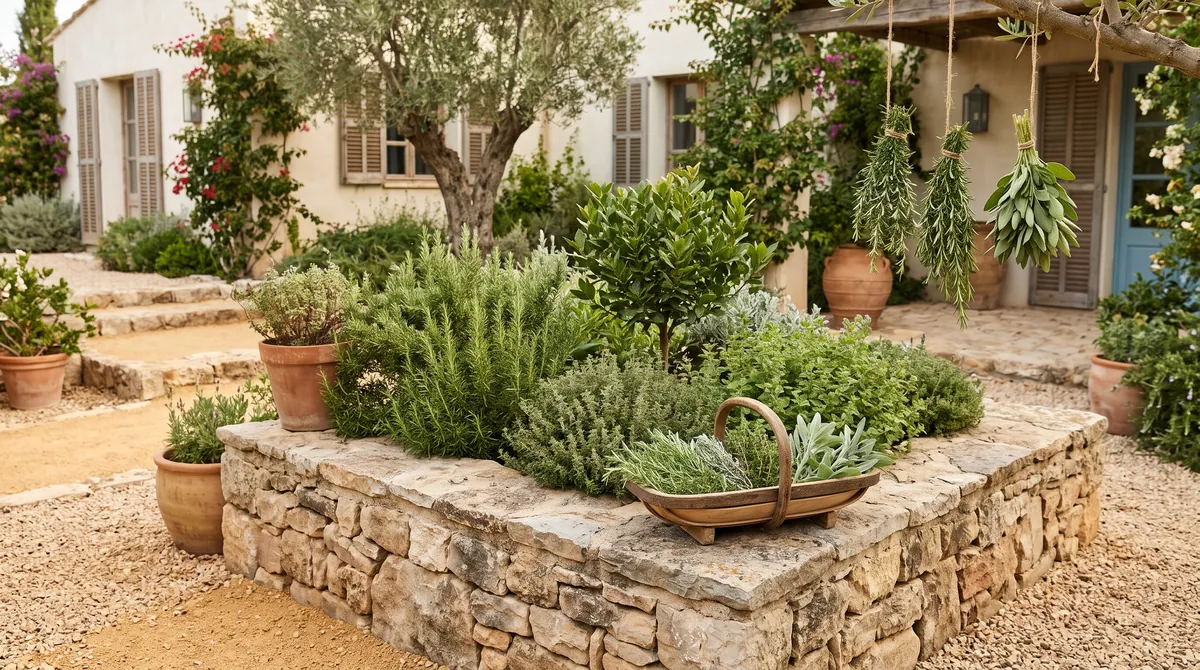
Dig a hole about 30 cm deep, fill it with water and watch. If it has drained within an hour or so, you have a good start. If water still stands there the next morning, improve the ground before you plant: work in plenty of coarse grit or crushed stone, build low mounds or raised beds so that the crowns of the plants sit above the wettest layer, or plant on a slope where water can run off. What you should not add is rich compost or manure. A dry garden wants lean soil, and generous feeding only produces soft, sappy growth that collapses in the first heatwave and flops in the wind.
Plant in autumn, water like the rain
Timing matters more here than in almost any other kind of garden. Plant in autumn, as soon as the first rains have softened the ground, and the young plants have the whole wet season to send roots down before they face their first summer. Spring planting works in cooler regions, but in the south it leaves the roots only a few weeks before the heat arrives. Small plants in small pots are the better buy: they settle faster than large ones and adapt to the site from the start.
Watering follows one rule: deeply and rarely. In the first summer, give each plant a thorough soaking, roughly 10 litres for a shrub, then wait until the soil has dried well below the surface before you water again. Little and often, the habit of the balcony gardener, keeps roots near the top, where they are the first to suffer. From the second or third year most plants manage on rainfall alone in a typical Mediterranean summer, and many look better for it.
Where you do need water regularly, for a pot or a fruit tree in its early years, drip irrigation is the honest solution. It delivers water slowly at the base of the plant, loses very little to evaporation and leaves the gravel between plants dry, which keeps weeds down as well.
Stone as mulch
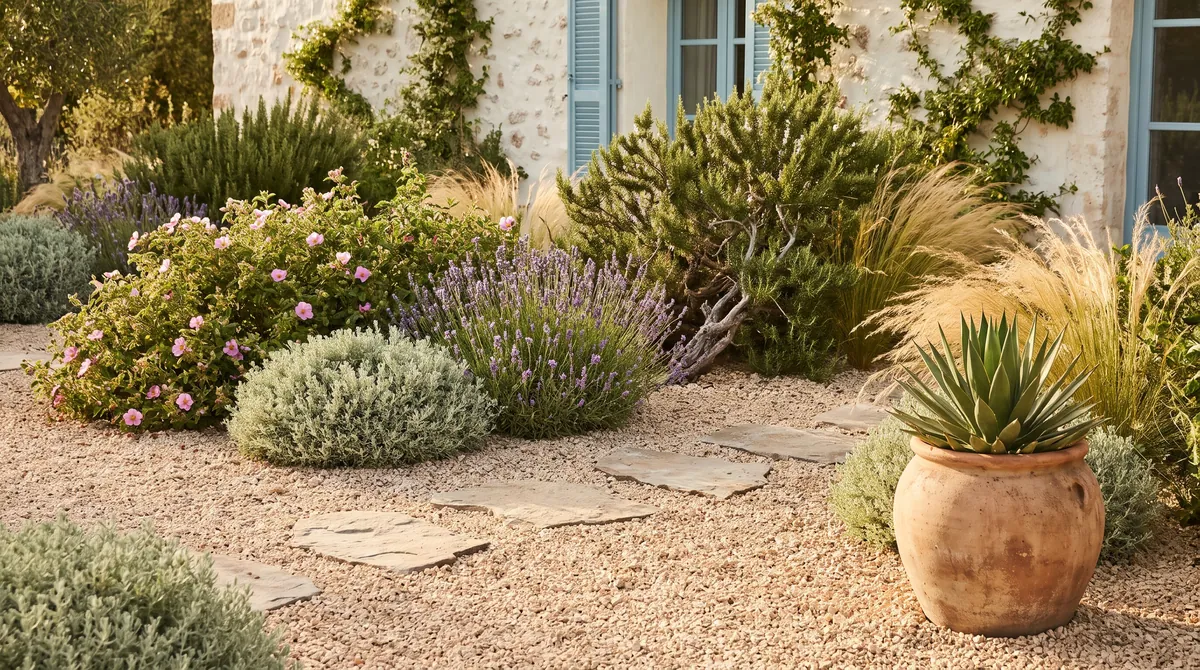
The gravel in a gravel garden is not decoration. In a dry garden, the stone does the work that a hose does elsewhere. A layer of about 5 to 8 cm of gravel or stone chippings keeps the soil beneath it cool, slows evaporation and makes life hard for weed seedlings. It also keeps the crowns of plants dry, since rain runs straight through stone instead of lying against the stems as it does under bark or straw. Choose a local stone if you can, so that its colour sits easily with walls and paths: pale limestone chippings reflect light and stay cooler, while a darker gravel warms up faster and suits plants that love heat.
Lay the gravel directly on the soil rather than on plastic sheeting, which traps moisture and sours the bed. Over time, seedlings of cistus, phlomis and stipa will appear in the stone. Keep the ones you like and pull the rest: this is how a dry garden ages well, quietly filling its own gaps.
In a dry garden, the stone does the work that a hose does elsewhere.
Grouping plants by thirst
Even a dry garden has a gradient. Near the house, by the terrace or a tap, you might accept a few plants that need an occasional drink in summer. Further out the planting becomes tougher, until at the edges nothing receives water but the rain. Grouping plants this way means you never water a cistus just because it stands next to something thirsty, and never leave a young fruit tree to struggle among plants that want nothing. A simple plan has three zones:
- Close to the house: fig, pomegranate, citrus in pots and herbs for the kitchen, with drip irrigation in long dry spells.
- The middle ground: lavender, rosemary, sage, santolina, thyme, myrtle and grasses such as Stipa, watered only in their first summer.
- The outer edge: olive, carob, cistus, phlomis and agave, left entirely to the rain once they are established.
Instead of a lawn
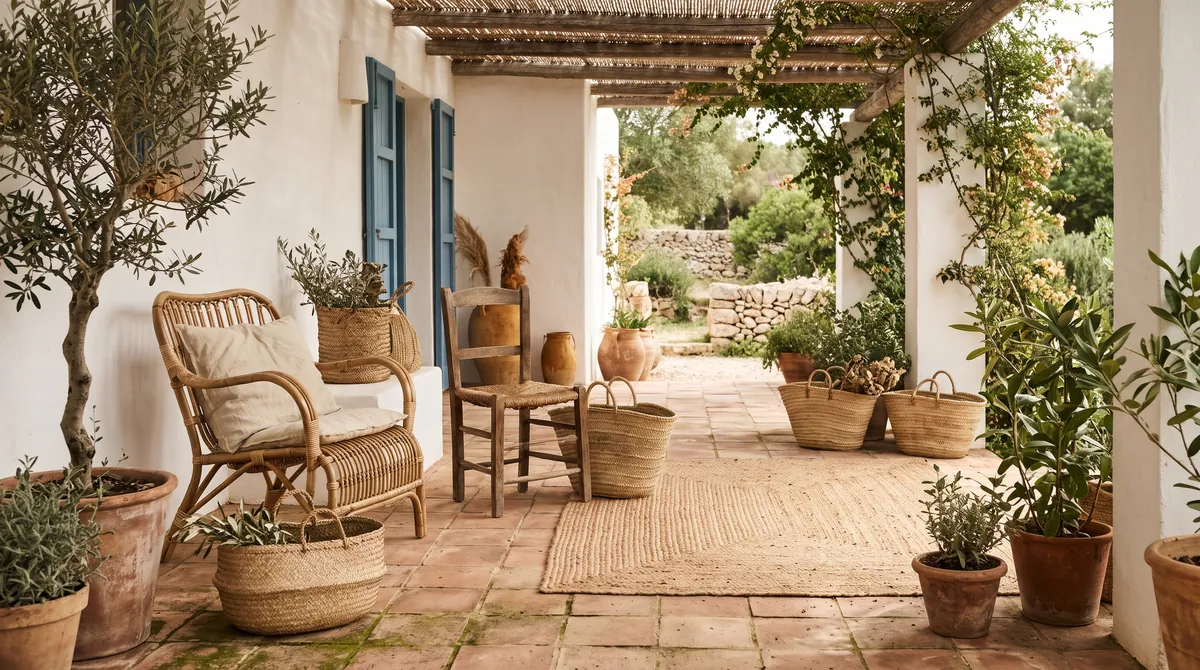
A green lawn is the thirstiest thing in most Mediterranean gardens, and in summer it turns the colour of straw unless it is watered every day. There are gentler alternatives. Creeping thyme and other low groundcovers form a fragrant mat that copes with light foot traffic and flowers for the bees in early summer. For larger areas, a meadow of grasses and wild flowers looks fresh in spring and dries to a pale gold in summer, which has its own beauty if you mow a path through it. For a courtyard or a narrow side garden, gravel with a few stepping stones and generous clumps of planting is the simplest answer of all.
Beautiful in every season
The old gardens of southern France and Spain show that a dry garden is not a summer compromise. In winter the silver and grey-green leaves hold their colour while much else is bare, and the first rosemary flowers open in the low sun. Spring is the great moment: cistus, lavender, sage, phlomis and thyme flower in waves, and the stipa catches the light. In high summer the garden becomes a study in shapes and textures, the dark mass of a myrtle hedge, the blue rosettes of an agave, the round cushions of santolina clipped after flowering. Autumn brings figs and pomegranates, and with the first rain comes the smell of wet stone, and the whole cycle begins again.
Questions and answers
Can I make a dry garden in a cooler, wetter climate?
Yes, as long as the drainage is excellent. In northern Europe winter wet is the main danger, so raised beds, slopes and plenty of grit matter even more than in the south. Choose the hardier plants, such as lavender, sage, thyme and santolina, and protect young plants from hard frost.
Should I put a weed membrane under the gravel?
It is usually better not to. Plastic sheeting traps moisture, prevents useful plants from seeding and slowly collects soil and weeds on top anyway. A thick layer of gravel on well prepared ground keeps most weeds away, and the few that appear are easy to pull from loose stone.
Do dry garden plants need fertiliser?
Hardly ever. They are adapted to poor, stony ground, and rich soil makes them grow soft and short-lived. Young fruit trees such as figs or pomegranates are the exception, and even they need only a little.
How long before a dry garden looks established?
Usually two to three growing seasons. The first year is about roots rather than height, so resist the urge to overplant or overwater. By the third spring most shrubs have knitted together and the garden begins to look after itself.
Further reading in our network
- sunalivSolar and smart living
Solar energy and smart living at home, with ideas for running a house and its garden on sunshine.
- colistiaIndoor and outdoor living
Indoor and outdoor living, with ideas for terraces, courtyards and the spaces between house and garden.
Our articles are general information written with care. Building work, roof loads, electrics, gas and fire need qualified professionals and local permits; plant care depends on your own climate and soil.