
Terracotta floors: handmade, machine-made and how to care for them
Baked earth underfoot: how handmade, machine-made and reclaimed terracotta differ, how a floor is laid and sealed, and why it only grows better with age.
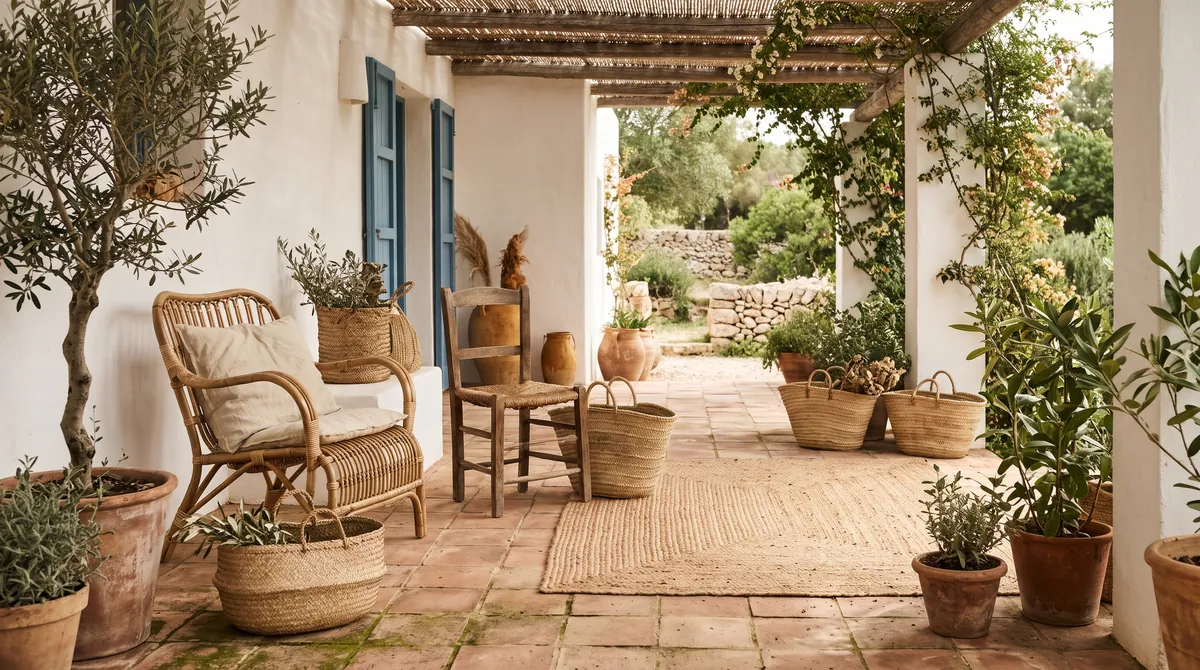
At four in the afternoon in July, with the shutters pulled to and the house holding its breath, the coolest place in the room is the floor. You notice it first through bare feet: terracotta that has spent the night giving up its warmth and the morning in shade feels almost damp to the touch, although it is perfectly dry. The colour is that of an apricot left in the sun, a little deeper at the edges where feet rarely reach. Nothing in a Mediterranean house says summer quite as quietly as this.
Baked earth, and why it behaves the way it does
Terracotta is Italian for baked earth, and the name is the whole recipe. Clay is shaped, dried and fired, often at roughly 900 to 1,100 °C, which is gentle compared with porcelain or stoneware. At that temperature the clay hardens into a body that stays porous, full of tiny channels that take up water, oil and air. That porosity is the source of everything people love about the material and of most of the things that worry them.
It gives the tiles their soft, warm colour, lets them sit happily in old houses with thick walls, and keeps them cool underfoot in summer. It also means that a fresh, unprotected floor drinks spilt wine like blotting paper. Understanding this one quality explains almost every rule of laying, sealing and cleaning that follows.
Handmade, machine-made or reclaimed
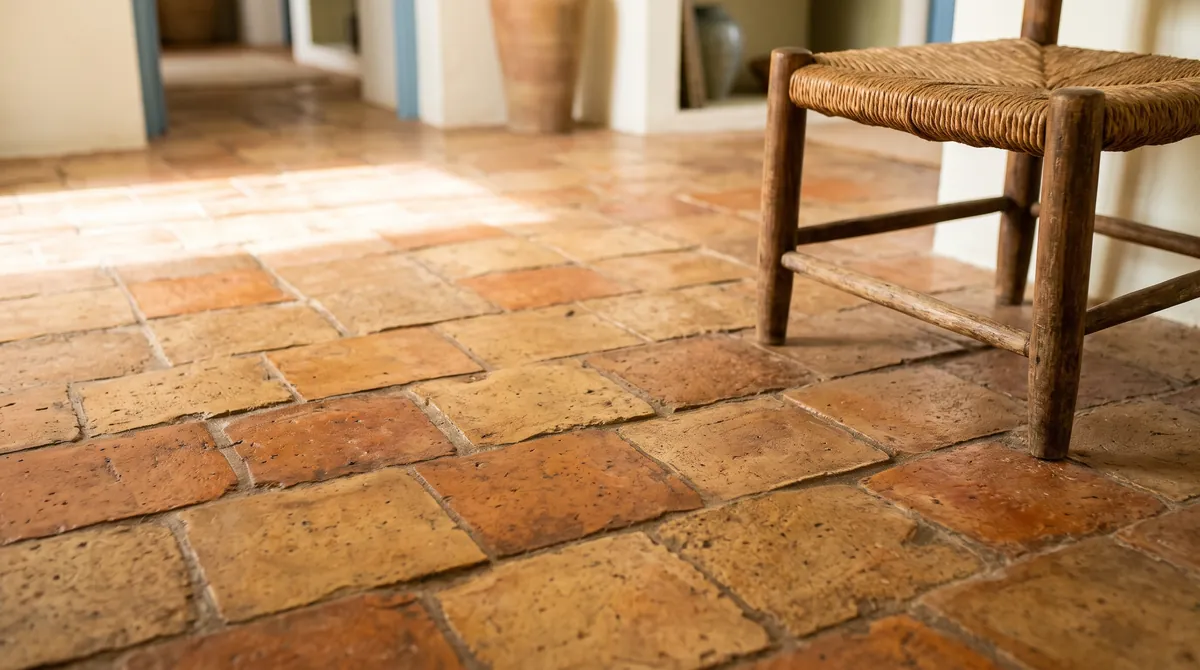
The first decision is which kind of tile you want, and it shapes the room more than the colour does. Handmade tiles start as clay pressed into wooden moulds, turned out and dried in the sun before firing. No two are quite alike: the edges are irregular, the colour shifts from tile to tile and even across a single tile, and you may find small marks such as a fingerprint or the grain of the mould. Machine-made tiles are extruded, the clay pushed through a die and cut, which gives uniform sizes, straight edges and an even colour. Reclaimed tiles come out of old buildings, cleaned and sorted, with a patina that new tiles can only gain with time.
| Aspect | Handmade | Machine-made | Reclaimed |
|---|---|---|---|
| Shaping | Pressed into wooden moulds, dried in the sun | Extruded and cut by machine | Mostly handmade, lifted from old buildings |
| Look | Irregular edges, varied colour, small marks | Uniform size, straight edges, even colour | Worn surface and a deep, soft patina |
| Joints | Wider joints absorb the variation | Narrow, regular joints are possible | Wider joints, as sizes vary between lots |
| Suits | Country houses, old town houses, kitchens | Modern rooms and large, calm surfaces | Restorations and rooms that should feel settled from day one |
| Watch for | Sort and mix tiles before laying | Can look flat in a rustic room | Thickness, cracks and old residues on the back |
Where the tradition lives
Terracotta is made wherever there is good clay and a habit of building with it, and regional tiles have their own character. Impruneta, in the hills near Florence, is known for frost resistant terracotta made from local clay, and Tuscany as a whole is full of warm, rosy floors in farmhouses and villas. In Spain, barro cocido, fired clay, comes from regions such as Andalusia and covers kitchens, patios and courtyards across the south. In Provence the classic shape is the hexagonal tomette, a small six-sided tile laid in a honeycomb that makes even a narrow corridor look woven.
Shape matters as much as colour. Large squares and rectangles make a room feel calm and spacious; hexagons and small formats add movement and suit rooms where furniture breaks up the floor anyway. In a small kitchen, a simple running bond often looks more generous than a busy pattern.
Laying a terracotta floor
Terracotta needs a level, stable bed and joints between the tiles, and it needs an experienced tiler. Handmade tiles vary in thickness and outline, so laying them is closer to building a wall than to clicking down a modern floor: each tile is set, tapped and checked, and the joints are adjusted to absorb the differences. A few points make the difference between a floor that looks lived in and one that simply looks uneven.
- Mix before you lay. Open several boxes or pallets and draw from all of them, so that colour variations spread across the room rather than forming patches.
- Keep the joints generous. With handmade tiles, wider joints look intentional and hide the irregular edges; tight joints exaggerate them.
- Plan for warmth. Terracotta is suitable for underfloor heating and holds and releases warmth gently; tell your tiler at the start, because it changes the build-up of the floor.
- Let it dry. A new floor holds a lot of moisture from the bed and the joints and needs time to dry out before it is sealed.
Sealing: oil and wax or an impregnating sealer
Unsealed terracotta stains easily. Olive oil, red wine and coffee sink into the surface and stay there. Traditionally, floors were fed with linseed oil and then waxed, which deepens the colour, gives a soft sheen and builds up a protective layer over the years. Today many tilers use impregnating sealers that soak into the pores and repel water and oil without changing the look very much. Both protect against stains from oil and wine; neither makes the floor indestructible.
The choice is partly about appearance. Oil and wax make the colour richer and a little darker, and they suit old houses and reclaimed tiles. An impregnating sealer keeps the dry, matt colour of the fired clay, which many people prefer in a pared-back modern room.
Everyday care, and the white bloom on new floors
A sealed terracotta floor asks for very little. Sweep or vacuum regularly, because grit acts like sandpaper on the surface, and mop with warm water and a neutral soap. Avoid acidic cleaners such as vinegar or descalers, and strongly alkaline products, both of which attack the protection and can dull the clay. Every so often, depending on how busy the room is, renew the wax where the floor works hardest: in front of the sink, by the door, under the dining table.
New owners are sometimes alarmed by white, powdery patches that appear in the weeks after laying. This is efflorescence: salts carried up by moisture as the floor dries and left behind on the surface when the water evaporates. It is not a defect, and it fades with time and regular cleaning. Resist the urge to attack it with acid; brush it off dry and be patient. A terracotta floor is not finished on the day it is laid; it is finished by years of feet, sweeping and wax.
A terracotta floor is not finished on the day it is laid; it is finished by years of feet, sweeping and wax.
Reclaimed tiles and outdoor terraces
Reclaimed tiles from old farmhouses and town houses bring a patina that cannot be hurried: edges rounded by use, surfaces polished by generations, colours softened by old wax. They are worth looking for if you are restoring an old house or want a new room to feel settled. Before you commit, check that there are enough tiles of one kind for the whole room plus a few spares, that their thickness is similar, and that cracks, crumbling edges and old mortar on the back are within reason.
Outdoors, terracotta is lovely on a covered terrace or a patio, but in areas with frost only frost resistant tiles belong outside. Water soaked into a porous tile expands when it freezes and can flake the surface or split the tile. By the coast in the south, where frost is rare, the choice is wider; in the hills or further north, ask specifically for frost resistant clay, and give outdoor floors a slight fall so that rain runs off instead of standing in the joints.
Questions and answers
Is terracotta a good choice for a kitchen?
Yes, it has been the kitchen floor of the Mediterranean for a very long time. Seal it well, wipe up oil, wine and lemon juice promptly, and renew the protection in front of the cooker and sink more often than elsewhere.
Can I lay terracotta over underfloor heating?
Yes, terracotta is suitable for underfloor heating and holds warmth well. The bed, the joints and the build-up of the floor should be planned for it, so mention the heating to your tiler before work starts.
What are the white marks on my new terracotta floor?
Most likely efflorescence, salts brought to the surface as the floor dries out. They fade with time and normal cleaning. Brush them off dry and avoid acidic cleaners, which damage the sealer.
Can terracotta tiles go outside?
On a covered terrace, almost always. In areas with frost, use only tiles that are declared frost resistant, because water in the pores can freeze and break the surface.
Further reading in our network
- ronerisBespoke craft and manufactories
Workshops and manufactories where bespoke tiles, ceramics and other crafted pieces are still made by hand.
- MurosoArchitecture and interiors
Architecture and interiors, with houses where traditional floors meet contemporary rooms.
Our articles are general information written with care. Building work, roof loads, electrics, gas and fire need qualified professionals and local permits; plant care depends on your own climate and soil.