
The long table: setting a summer table outdoors
Where to place the table, what to put on it and what to leave off: practical ideas for long outdoor meals that last until the candles burn down.
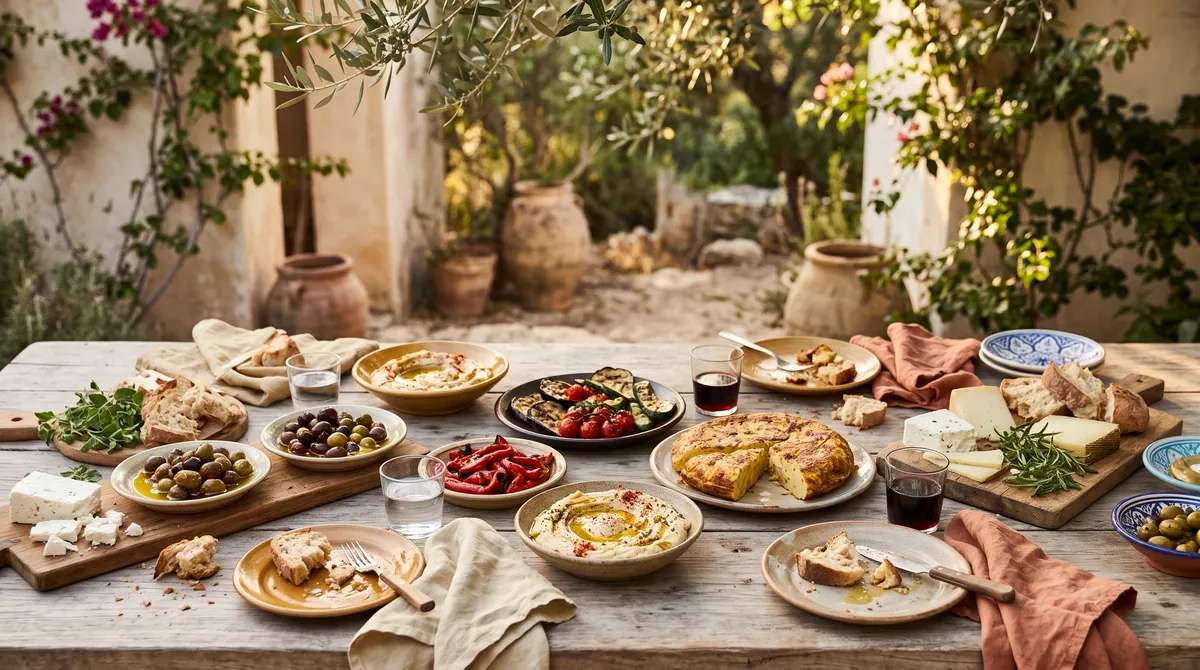
The table stands under the old fig tree, where the shade will fall at nine in the evening, not where it was at noon. A linen cloth, a little crumpled, lifts at one corner in the breeze and settles again, held by a clip. There are sturdy tumblers instead of tall glasses, a bowl of lemons in the middle and a jug of water with sprigs of mint. Nobody will remember whether the plates matched. They will remember that they could see each other across the table, and that nobody had to get up for more bread.
Choose the place before the table
The most beautiful table is useless in full sun. Before anything else, watch where the shade falls at the time you will actually eat. A terrace that is cool at lunch may lie in hard, low western light by seven, and the evening sun shines straight into the eyes of everyone facing it. A tree, a pergola or the shadow of the house itself decides the spot, and on very hot days a sail or a large parasol can extend it.
Level ground comes next. On gravel, lawn or old uneven paving, chairs rock and glasses tip, and nobody relaxes. Find the flattest place, wedge the table legs if you must and check each chair. Leave space behind the chairs, roughly a metre, so that guests can push back and someone can pass with a hot dish without asking half the table to stand up.
Linen, and a plan for the wind
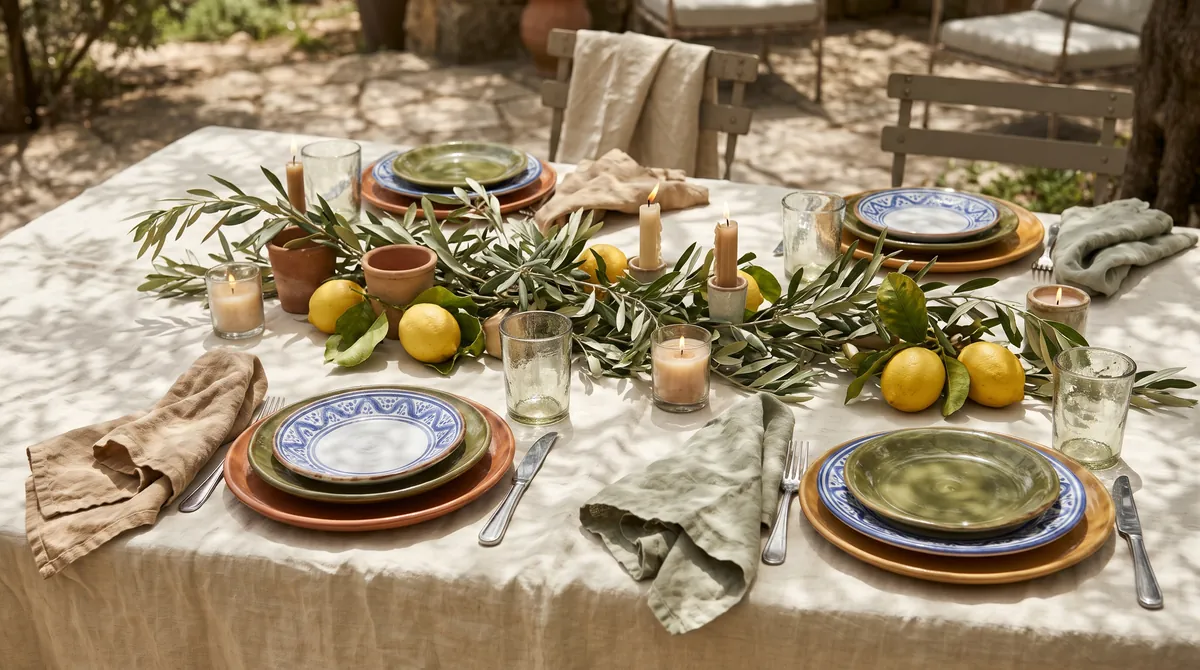
Linen is the natural cloth for a summer table. It washes well, dries quickly on the line and does not need ironing, because its crumpled look is part of the charm. Natural, white, faded blue, terracotta or olive green all sit well with ceramics and food. On a handsome old wooden table, a runner along the centre may be all you need, leaving the wood visible at each place.
Outdoors the wind is always one of the guests, so plan for it.
- Clip the tablecloth at the corners, or sew small weights into the hem.
- Choose sturdy glass tumblers rather than tall stemware that tips in a gust.
- Keep heavy things (jugs, bowls, bread boards) along the centre line, where they anchor the cloth.
- Use cloth napkins, which stay where they are put, instead of paper ones that sail into the garden.
- Put candles in hurricane glasses so that a breeze does not blow them out or spill wax.
Plates, glasses and cutlery
A summer table looks best when it seems collected rather than bought as a set. Mixing ceramics works well if you limit yourself to two or three colours: white with blue, cream with terracotta, or green with yellow. A large painted platter can carry the pattern while the plates stay plain, or the other way round. The shared colours hold everything together.
Sturdy glass tumblers are the quiet heroes of outdoor meals. They stand firmly on a linen cloth, survive being knocked over, stack easily and serve water and wine equally well. Cutlery with wooden or horn handles feels warm in the hand and suits rustic ceramics, but wash it by hand rather than in the dishwasher, which dries out the handles. Generous cloth napkins complete the table and go into the wash with the tablecloth the next morning.
Keep the centre low
The middle of the table is for things that help conversation, not block it. Centrepieces should be low enough for everyone to see each other: small pots of herbs such as basil, thyme or rosemary, a few olive branches laid along the runner, a bowl of lemons, or seasonal fruit such as figs, apricots or grapes, which can be eaten at the end of the meal. Sit down and look across the table. If you cannot see the eyes of the person opposite, take something away. Strongly scented flowers are best kept away from food, because they compete with it.
Think about light before it gets dark. Candles in hurricane glasses bring a warm glow to the table itself, lanterns on the ground or hanging from a branch light the edges, and string lights above the table carry the evening on long after sunset. Light from above and around is kinder than a lamp at eye level, which dazzles and draws insects towards the plates.
Seating for a crowd
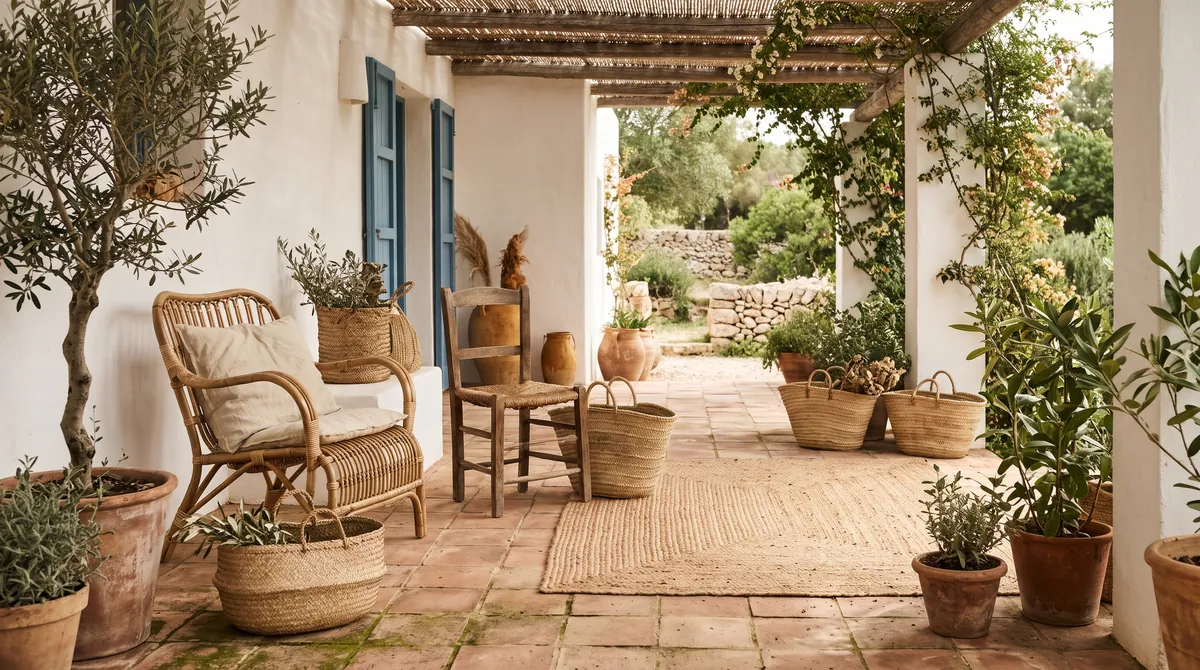
Chairs with cushions are comfortable for a long evening, and outdoor cushions that dry quickly are worth having where dew falls at night. When many guests come, benches are the answer: a bench on each side seats more people than chairs and lets late arrivals squeeze in. They need level ground, though, and they are harder to leave in the middle of the meal, so keep a couple of chairs with backs at the ends for guests who prefer them.
Family style, from the middle
The relaxed way to serve outdoors is family style: platters and bowls in the middle and everyone helping themselves. It saves the host from plating in the kitchen, keeps the food moving and makes the table look generous. A side table or a trolley in the shade holds the next dishes, spare plates and the bread knife, which spares many trips to the house.
Water should never run out. Fill jugs with water, slices of lemon and a few sprigs of mint or lemon verbena, and keep ice in buckets in the shade, where it lasts much longer. Cover food that waits with mesh domes or a piece of fine linen to keep insects and dust away, and bring it out only when you are ready to eat.
Nobody will remember whether the plates matched. They will remember that they could see each other across the table.
Late dinners and a relaxed host
In Spain and other parts of the south, summer dinners often begin late, when the heat has gone and the stone has started to cool. It is a rhythm worth borrowing wherever you live. Set the table in stages through the late afternoon, choose dishes that wait well, and light the candles only when the first guests arrive. Above all, the table does not need to be perfect. A wine stain on the linen, a chair that does not match and a bowl of fruit that was half eaten before dinner are signs of a good evening, not failures of hosting.
Questions and answers
How do I stop the tablecloth blowing away?
Use tablecloth clips at the corners or sew small weights into the hem, and keep heavy jugs and bowls along the centre. A heavier linen moves less than a thin cotton. On very windy evenings, a bare table with a runner held down by bowls is easier than a full cloth.
Should the plates match?
Not at all. Mixed ceramics look relaxed and collected, as long as you keep to two or three colours. A patterned platter with plain plates, or patterned plates with a plain platter, holds the table together.
What centrepiece works outdoors?
Anything low that does not block the view: small pots of herbs, olive branches along the runner, a bowl of lemons or seasonal fruit. Add candles in hurricane glasses for the evening, and keep strongly scented flowers away from the food.
How do I keep drinks cold through a long dinner?
Keep ice in buckets in the shade, where it lasts much longer, and refill jugs from there. A spot under the table or on a shaded side table works well. Jugs of water with lemon and herbs look good and are easy to top up.
Further reading in our network
- colistiaIndoor and outdoor living
Indoor and outdoor living, with ideas for terraces, dining spaces and furniture that moves between them.
- vinorinaWine regions of Europe
The wine regions of Europe and the wines that belong on a long summer table.
Our articles are general information written with care. Building work, roof loads, electrics, gas and fire need qualified professionals and local permits; plant care depends on your own climate and soil.