
Olive oil at the table: grades, harvest and how to keep it
What extra virgin really means, why a peppery cough is good news and how to keep a bottle at its best: a practical guide to choosing, tasting and serving olive oil.
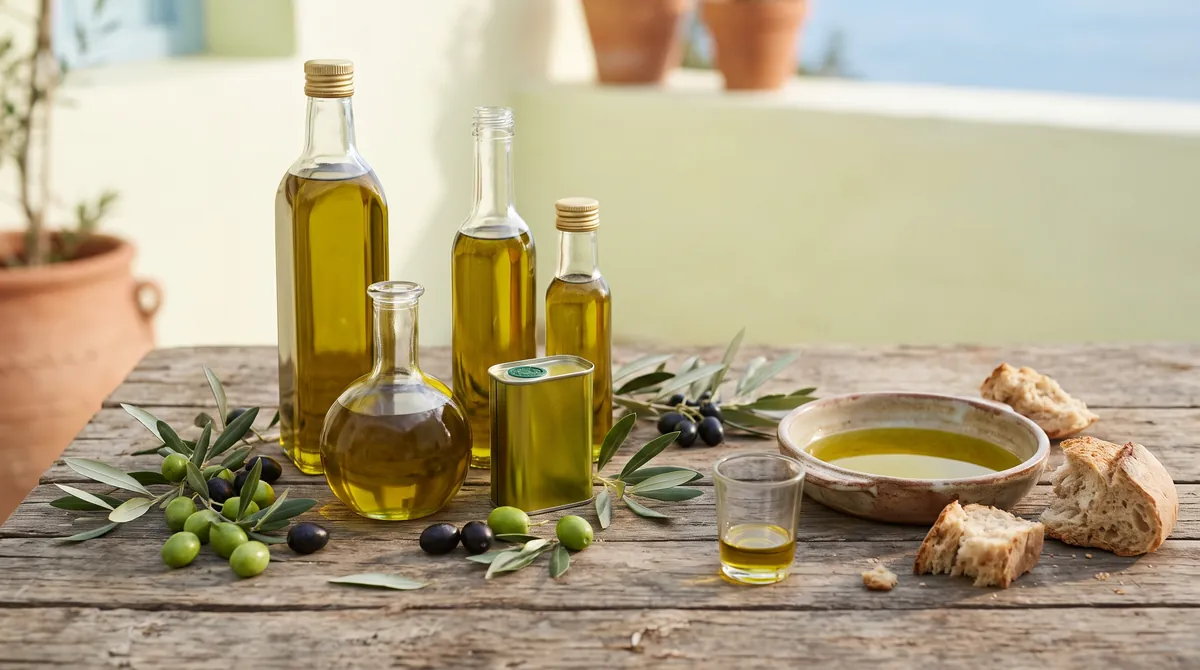
A dish of new oil is set on the table beside a basket of bread. It is almost green, slightly cloudy, and it smells of cut grass and green tomato. Dip a corner of bread and the first taste is fruit, then a bitterness on the tongue, and a moment later a peppery catch at the back of the throat that makes someone cough and laugh. That cough is not a fault. It is exactly what the people who grow and mill olives hope for in an early oil.
What the grades on the label mean
Olive oil sold in the European Union is classified in clear categories, and knowing them makes every shop shelf easier to read. The differences lie in how the oil was obtained, in its free acidity and in how it tastes.
| Category | What it means | Best use |
|---|---|---|
| Extra virgin olive oil | The highest grade, obtained only by mechanical means, with free acidity of no more than 0.8 %, no sensory defects and some fruitiness | The table, finishing dishes and cooking |
| Virgin olive oil | Also obtained by mechanical means, with free acidity of no more than 2 % and slight sensory defects allowed | Everyday cooking |
| Olive oil composed of refined and virgin olive oils | A blend of refined oil, which has little taste of its own, with some virgin oil | Cooking where you want a mild flavour |
| Olive pomace oil | Obtained from the pomace, the paste of skins and stones left after milling, and refined | Frying and kitchen use, not the table |
Free acidity is measured in the laboratory; you cannot taste it, and colour says nothing about quality either.
Two other phrases appear often. Cold extraction and first cold pressed may only be used when the oil was obtained below 27 °C. Most modern mills work with centrifuges rather than presses, so the word ‘pressed’ is often more tradition than description. Many regional oils also carry a protected designation of origin, which ties them to a defined area and its rules, usually including the olive varieties allowed.
Early harvest, late harvest
The olive harvest usually runs from October to January, depending on the region and the variety. When the fruit is picked changes the oil in the bottle as much as where it grew. An early harvest of green olives gives grassy, bitter and peppery oils, vivid and sometimes almost fierce. A later harvest of riper fruit gives milder, rounder oils with softer fruit and less bite.
Bitterness and the peppery catch in the throat are positive tasting attributes, not faults, and they mark fresh oil from green fruit. A late, gentle oil is not worse, only different: it suits delicate fish, fresh cheese and baking, where a bold oil would take over. Look for the harvest season on the label where it is given, because it tells you more about freshness than a best-before date.
Varieties worth knowing
Many olive varieties are grown around the Mediterranean, but a handful appear on labels again and again. Their character is a starting point rather than a rule, since harvest time, soil and the mill all shape the final taste.
- Picual (Spain): usually robust, green and distinctly bitter, with a leafy aroma.
- Arbequina (Spain): small olives and a mild, fruity oil, often with notes of apple and almond.
- Hojiblanca (Spain): often balanced, with a sweetish start and a peppery finish.
- Koroneiki (Greece): small olives that give an intense, green and peppery oil.
- Frantoio (Italy): fruity, with clear bitterness and pepper.
- Leccino (Italy): usually mild and soft, and often blended with stronger varieties.
- Coratina (Italy): among the boldest, very bitter and pungent, especially when picked early.
How to taste it properly
Tasting oil is easy to learn and changes the way you buy it. All you need is a small glass and a few minutes of attention.
- Pour a spoonful of oil into a small glass.
- Cover it with one hand and warm the glass in the palm of the other for a minute or two, which releases the aromas.
- Uncover it and smell: cut grass, green apple, tomato leaf, artichoke or almond are all good signs.
- Take a small sip and draw in a little air through your teeth to spread the oil across your mouth.
- Notice the fruit, the bitterness on the tongue and the pepper in the throat, and how long each one lasts.
Defects are just as easy to recognise once you have met them. An oil that smells of old nuts, putty or crayons is rancid, and one that smells musty, vinegary or of fermented olives was made from fruit that waited too long or was poorly stored. Taste two oils side by side and the differences become obvious.
Light, heat and air: keeping oil well
Light, heat and air are the enemies of olive oil. Keep it in a dark glass bottle or a tin, closed, in a cool cupboard, never on a sunny windowsill or beside the cooker, however pretty the bottle looks there. Use it within some months of opening. Oil is not wine: it does not improve with age, so open it, use it and enjoy it while it is young. Buy sizes you will finish and, if you buy a large tin, decant a little at a time into a smaller dark bottle for the kitchen.
Oil kept somewhere cold may turn cloudy and thicken. This does no harm and clears again at room temperature. A cruet on the table should be emptied and washed now and then, so that old oil does not linger at the bottom and spoil the fresh.
Oil is not wine: it does not improve with age, so open it, use it and enjoy it while it is young.
Oil at the table
The simplest way to show off a good oil is also the oldest: good bread, a dish of oil and a little salt. Beyond that, extra virgin olive oil is above all a finishing touch. A thread over grilled fish, a bowl of white beans, a tomato salad, a soup or a slice of toasted bread changes the dish in a moment. Match the oil to the food: robust, peppery oils for grilled meat, bitter leaves and beans, milder ones for fish, fresh cheese and vegetables whose own taste you want to keep.
Extra virgin olive oil can also be used for cooking, and in much of the Mediterranean it is the everyday fat for frying eggs, softening onions and roasting vegetables. There is no need to save it for special occasions; a bottle that is used up quickly is a bottle that is always fresh.
Questions and answers
Is a bitter or peppery oil a bad oil?
No. Bitterness and the peppery catch in the throat are positive tasting attributes, typical of fresh oil from green olives. Faults show up differently, as rancid, musty or vinegary smells.
Can I cook with extra virgin olive oil?
Yes. Extra virgin olive oil can be used for cooking as well as at the table, and in much of the Mediterranean it is the everyday cooking fat. Many cooks keep a bolder oil for finishing and a milder one for the pan.
Does a greener colour mean better quality?
No. Colour depends on the variety and ripeness of the olives and says nothing about quality. Professional tasters even use coloured glasses so that the colour does not influence them.
How long does olive oil keep after opening?
Use it within some months of opening. Light, heat and air slowly spoil it, and it does not improve with age. Keep the bottle closed in a dark, cool cupboard and buy sizes you will finish.
Further reading in our network
- cucianaItalian fine dining in Europe
Italian fine dining and the regional products, olive oil among them, that shape it.
- andaluisTravel and sights in Andalusia
Travel and sights in Andalusia, from its cities to the olive country around them.
Our articles are general information written with care. Building work, roof loads, electrics, gas and fire need qualified professionals and local permits; plant care depends on your own climate and soil.