
Planning an outdoor kitchen: fire, water and shade
Before the first stone is laid, an outdoor kitchen is a question of wind, shade and the walk from the house. How to plan the zones, choose materials that last and keep fire and gas safe.
At seven in the evening the stone worktop still holds the warmth of the afternoon. Someone is slicing tomatoes beside the grill, a pan of water ticks on the side burner, and the smoke of vine prunings drifts out across the garden rather than into the bedroom window, because whoever built this kitchen watched the wind for a whole summer first. A good outdoor kitchen feels effortless like this. It is rarely an accident. It comes from a dozen small decisions about distance, shade and water, made long before anyone lights the first fire.
Why the south cooks outside
Across the Mediterranean, the summer kitchen is an old idea. In many country houses a second hearth stood in the courtyard, under a vine or in a small outbuilding, so that the frying, the preserving and the long simmering of the hottest months happened outdoors while the rooms behind thick walls and closed shutters stayed cool. The logic still holds. An outdoor kitchen is not a status object but a way of moving heat, smoke and smells away from the rooms you want to keep comfortable. Keep that purpose in mind and many choices become simpler.
Five zones, in the order you use them
Like a good indoor kitchen, an outdoor one follows the path of the food, from fridge to worktop to heat to plate. Think of five zones before you think of any object.
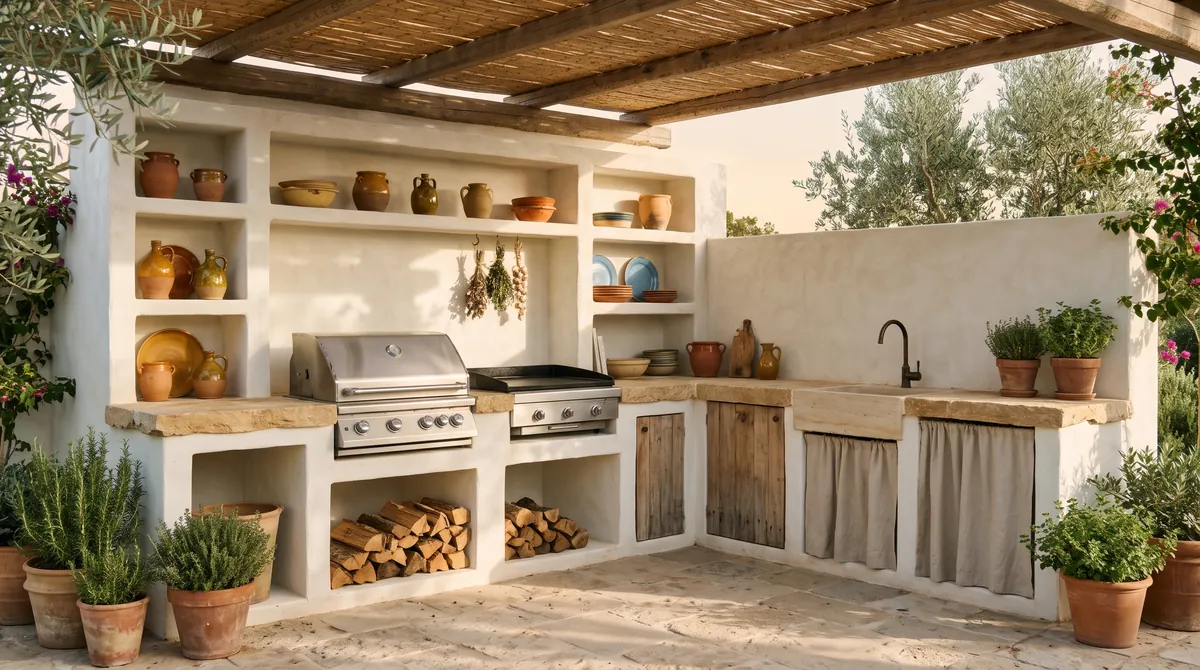
- Cooking: a grill, a plancha for fish and vegetables, perhaps a wood-fired oven and a side burner for a sauce or a pot of water. Choose the two or three you will use every week rather than all of them.
- Preparation: worktop on both sides of the grill, one side for raw food going on, the other for cooked food coming off. About 60 cm on each side is a sensible minimum, more on the side where you plate up.
- Washing: a sink with a water supply and a proper drain, which saves countless trips indoors with greasy tongs and sticky hands.
- Storage: cupboards of stainless steel or masonry for tools, fuel, trays and plates, and a fridge for drinks and marinated food.
- Dining and shade: a table close enough to pass a dish across, far enough away that the smoke misses the guests, and shade over both the cook and the table.
The classic arrangement is a straight run against a wall or an L that wraps around a corner, with the sink at one end, the grill in the middle and storage below. An island lets the cook face the guests, which is sociable, but water, drainage and power then have to come up through the floor, and that is hard to change later. A worktop height of about 90 cm suits most people; adjust it for a very tall or short cook.
Where to put it: the walk, the wind and the ground
Start with the walk from the indoor kitchen. However well equipped the outdoor one is, the salad, the bread and the forgotten salt still come from inside, so place it close enough to carry a tray without a detour down steps or across the lawn. Twenty metres feels short in the morning and long on a hot evening with full hands.
Then watch the wind. Smoke must not blow into your own windows, nor across the fence towards your neighbours, so check the prevailing wind at the hour you actually cook, not at noon. Near the coast the breeze often turns between day and evening. A ribbon tied to a cane and watched over a few weeks tells you more than any plan.
The ground has to be firm and level. A masonry kitchen with a stone worktop is heavy and needs a proper foundation or slab rather than a few paving stones on sand, otherwise joints crack as the ground settles. Let the surface fall gently away from the house so that rain and washing water drain off. Think of the cook, too: a pergola with a vine, a solid roof or a sail gives welcome shade, but keep any fabric, reed or timber well clear of flames and rising heat.
Materials that cope with sun, salt and lemons
The Mediterranean way is masonry: block or brick carcasses, rendered or faced with stone, sometimes finished with tiles. It is solid, it ages well and it sits naturally beside old walls. Stainless steel is lighter and quicker to fit. Near the sea choose grade 316, which resists salt air far better than the more common grades, which can develop brown spots of rust.
The worktop is the surface you touch most, and it is where the wrong choice shows first. Granite resists heat and stains better than marble or limestone, which are etched by acids such as lemon juice and wine.
| Worktop | Heat | Lemon, wine and oil | Worth knowing |
|---|---|---|---|
| Granite | Very good | Resists stains and acids well | Hard wearing and heavy; seal it as the supplier advises |
| Marble | Good | Etched by lemon, wine and vinegar | A honed finish hides dull marks better than a polished one |
| Limestone | Good | Etched by acids, can absorb oil | Soft and warm in colour; needs regular sealing |
| Concrete | Good | Needs a sealer against oil and acids | Can be cast in one piece; fine hairline cracks are possible |
| Glazed tiles | Very good | Tiles resist, grout joints can stain | Choose frost-resistant tiles and dark or sealed grout |
A general guide: stones vary, so test a sample with a drop of lemon juice and a drop of oil before you order.
Water, power and gas: work for qualified trades
An outdoor kitchen brings water, electricity and often gas into the open air, where rain, dust and heat test every connection. Fixed electrics, from weatherproof sockets to the light over the grill, should be planned and installed by a qualified electrician, and in many countries this is a legal requirement. The same goes for the water supply and drainage. A plumber will lay the pipes with enough fall and, in colder areas, protect them from frost, either with drain valves so that the system can be emptied before winter or by laying the pipes deep enough.
Gas deserves particular care. Whether it comes from bottles or a fixed supply, have it installed and checked by a qualified gas fitter, and look over hoses and connections regularly. Bottled gas is heavier than air and collects at low points, so any cupboard for bottles needs ventilation near the floor; ask your gas fitter what applies where you live.
Lighting matters more than most plans allow. For cooking after dark you need clear, glare-free light on the grill and the worktop, so that you can see whether the chicken is done. The table wants something warmer and lower, so put the two on separate switches.
Fire safety and the rules of summer
Any kitchen with a flame needs a clear zone around it. Keep the grill and the oven away from dry vegetation, hedges, pine needles and reed screens, and remember that sparks travel further on a windy evening. Have a fire extinguisher at hand, close to the cook rather than in the garage, and never leave a lit grill or oven alone.
Look up the local rules before you build. Many regions restrict open fires in dry periods to prevent wildfires, sometimes for the whole summer and sometimes from one day to the next when the risk is high. Such restrictions can apply to wood-fired ovens and charcoal grills, so it is worth knowing what is allowed before you invest in one.
An outdoor kitchen is not a status object but a way of moving heat, smoke and smells away from the rooms you want to keep comfortable.
Covers, cleaning and the end of the season
Fitted covers that breathe protect grills and steel doors without trapping condensation underneath. Brush the grill grates while they are still warm, wipe stainless steel along the grain and, near the sea, rinse off the salt film now and then with fresh water. Stone and concrete worktops show when they need new sealing: if a drop of water darkens the surface instead of beading, it is time. In colder areas, drain the water pipes before the first frost, empty the fridge and leave its door propped open, and store gas bottles in a ventilated place outside the house.
Questions and answers
How much worktop does an outdoor kitchen need?
Plan worktop on both sides of the grill: one side for raw food, the other for cooked food and plating. About 60 cm on each side is a sensible minimum, more if you often cook for a crowd. A separate surface near the sink helps with washing and drying.
Can I use marble for an outdoor worktop?
You can, but accept that lemon juice, wine and vinegar will etch dull marks into it and that it shows oil. Granite resists heat and stains better. If you love marble, choose a honed finish, which hides etching better than a polished one, and wipe spills quickly.
Do I really need a sink outside?
Not strictly, but it changes how you cook. With running water and a drain you can rinse vegetables, wash your hands after handling raw meat and clean tools without walking indoors. Supply and drainage should be installed by a plumber, with frost protection where winters are cold.
Is a gas grill safer than charcoal or wood?
Each has its own risks. Gas needs a correct installation, regular checks of hoses and connections and ventilated storage for bottles, while charcoal and wood throw sparks and leave hot embers. In dry periods some regions restrict open fires, so check the local rules and follow the advice of a qualified gas fitter.
Further reading in our network
- berbecuGrilling and barbecue
Grills, planchas and barbecue techniques explained, from choosing a fuel to cooking over live fire.
- colistiaIndoor and outdoor living
Ideas for living indoors and outdoors, from terrace furniture to the rooms that open onto it.
Our articles are general information written with care. Building work, roof loads, electrics, gas and fire need qualified professionals and local permits; plant care depends on your own climate and soil.